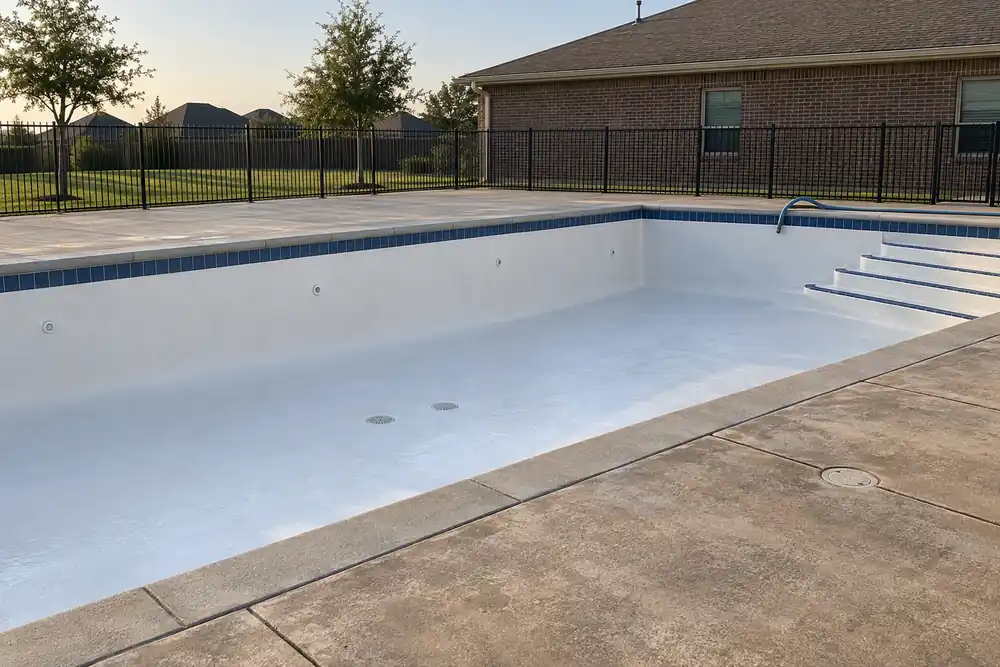
Rockwall Pool Resurfacing: Remodeling, Replastering, Pebble and Quartz Finishes, Residential & Commercial
Serving Rockwall, Texas
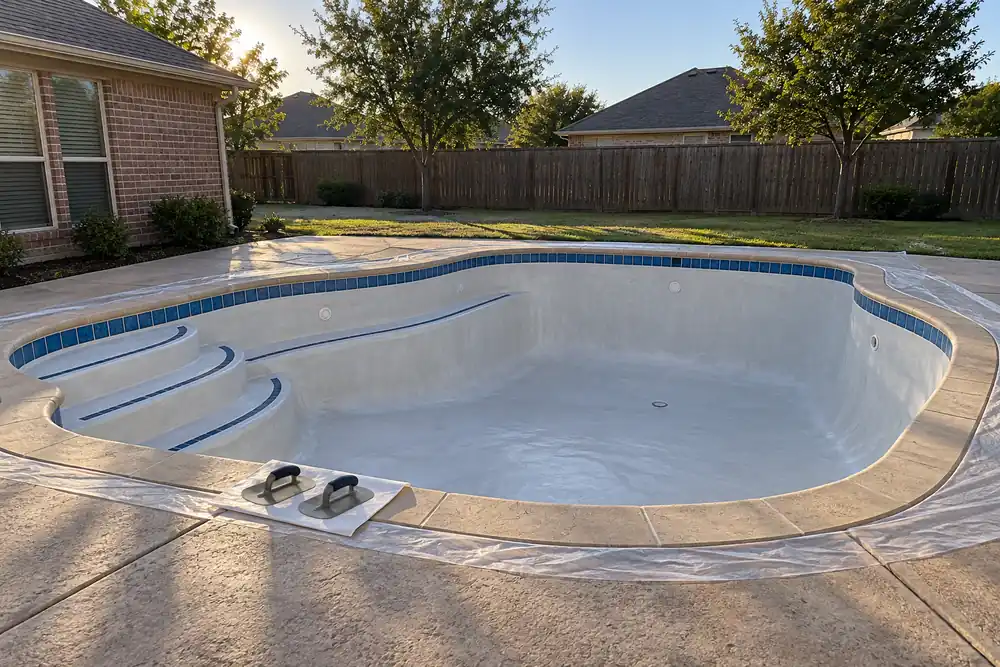
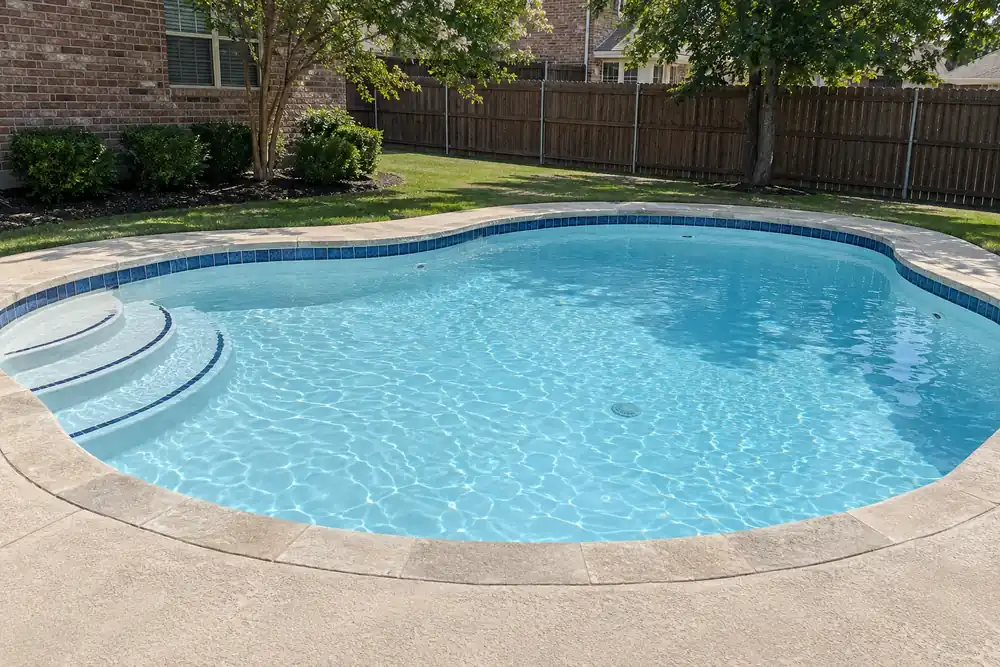
Rockwall Pool Resurfacing remodels, replasters and refinishes swimming pools in Rockwall, Texas, for homes, HOAs, apartment communities and commercial properties. We renovate pools, replaster them in white or colored plaster, refinish them in pebble, quartz and polished finishes, and resurface HOA and commercial pools; we also refinish fiberglass pools, replace waterline tile and coping, resurface pool decks, replace mastic, and repair plaster, cracks and leaks. More than a third of Rockwall's homes were built in the 2000s, according to the Census Bureau's 2020–2024 American Community Survey, and the National Plasterers Council rates traditional white plaster as a 5 to 8 year surface.
Rockwall buys its water from the North Texas Municipal Water District's Wylie plant, and the City's 2025 water report lists total hardness of 96.0 to 200 ppm and a pH of up to 8.8. That is the water a new finish is filled and started up with, so we'll talk through the fill and the National Plasterers Council's 28-day start-up along with the finish and the price. Estimates are free, and calls and estimate requests are answered 24/7.
Call or request a free estimate any time, 24/7
Get free estimates
No charge · answered 24/7
Why Rockwall Pool Resurfacing is the best call for replastering and remodels in Rockwall County
Free estimates, with the finish named
The estimate is free, and nothing is booked until you decide. SGM, the maker of Diamond Brite, tells buyers to ask for the finish brand and color by name in a bid and to photograph the bag labels with their batch numbers; we'll talk that through with you.
Calls and estimate requests answered 24/7
Calls and estimate requests are answered around the clock, weekends included, for Rockwall and the towns around it.
Backyard, HOA, apartment and commercial pools
Under the Texas Department of State Health Services rules, a pool run by a property owners association, an apartment complex or a hotel is a public pool, and the City of Rockwall issues its own operating permit for public pools. We work on both kinds and will tell you which rules apply to yours.
Finishes matched to North Texas water
The National Plasterers Council recommends fill water above 200 ppm calcium hardness for most cement-based finishes and says testing the fill water should "no longer be an option." We'll talk through how the fill and the start-up handle Rockwall's water before a price is set.
City and HOA pool rules, explained
Swimming pools are on the City of Rockwall's permit list, the City's storm-water ordinance bans filter backwash and pool water that hasn't been dechlorinated from its streets and drains, and Chandlers Landing's association approves pool projects before work starts. We'll go over what to confirm before the drain-down.
Numbers with their sources
Specs, rules and prices on this site name their source: the National Plasterers Council, the 2021 International Swimming Pool and Spa Code, the finish makers and the City of Rockwall. Prices are typical Dallas–Fort Worth or national figures, never quotes.
Call or request a free estimate any time, 24/7.
(469) 653-0486Commercial, HOA and apartment pool resurfacing
The City of Rockwall's public pool code, Ordinance No. 03-18, requires a building permit and City plan review before a public pool is remodeled and a pre-opening inspection before a remodeled pool is used, and the Texas Department of State Health Services adopts the 2021 International Swimming Pool and Spa Code for renovating commercial pools.
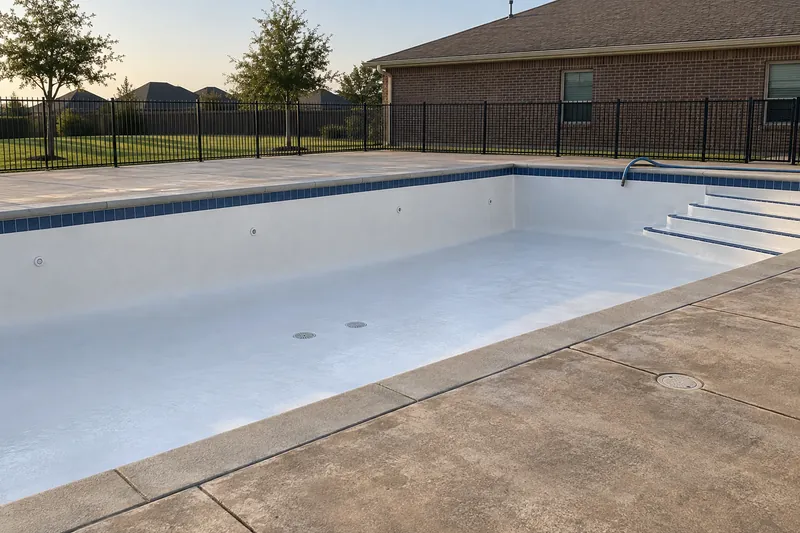
Commercial pool resurfacing
For pools other than residential ones, the 2021 code that Rockwall has adopted requires interior finishes that don't hide objects or surfaces in the water, at 6.5 or more on the Munsell color value scale, a measure of lightness. Lane markings, step and bench edge markings and waterline tile are among the exceptions.
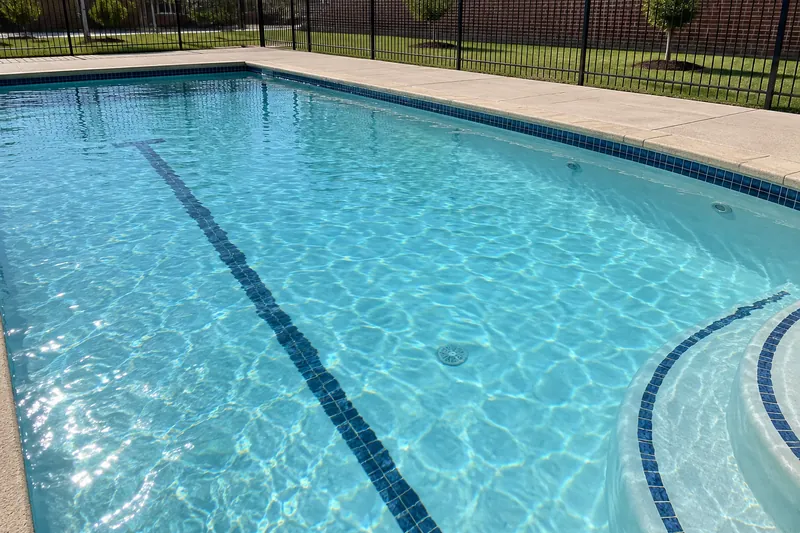
HOA and apartment pools
Texas law requires apartment owners and HOAs to inspect a pool yard's enclosure, gates and latches at least once every 31 days. For sales tax, the Texas Comptroller counts HOA- and apartment-owned pools as residential property, so remodeling labor on them isn't taxed; hotel pools don't count.
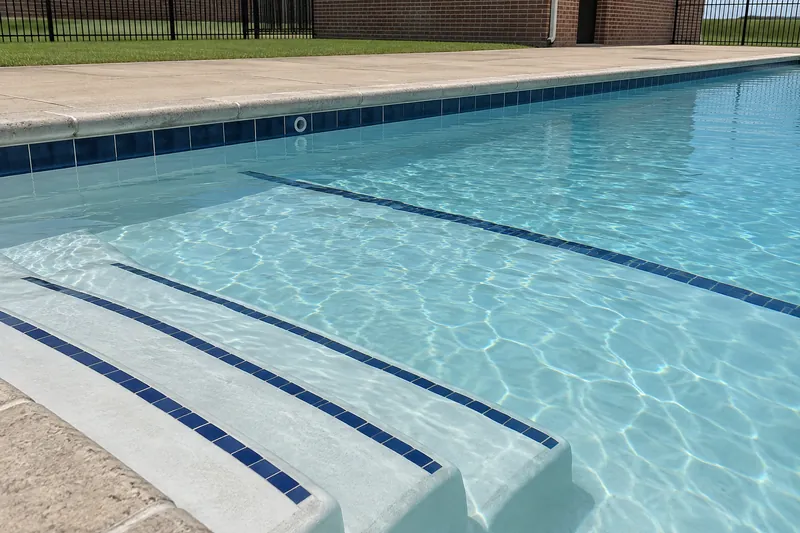
Commercial pool tile and depth markers
Every Texas public pool needs at least two depth markers in the top 4½ inches of the wall under the coping, with figures at least 4 inches high and no more than 25 feet apart. HOA and apartment pools deeper than 5 feet also need a contrasting line where the floor slopes to the deep end, such as a row of floor tile at least 4 inches wide.
Call or request a free estimate any time, 24/7.
(469) 653-0486Pool remodeling and additions
The 2021 International Swimming Pool and Spa Code, which the City of Rockwall has adopted, covers renovation and repair as well as new pools. An addition or alteration must meet the rules for a new pool, without forcing the existing parts up to code.
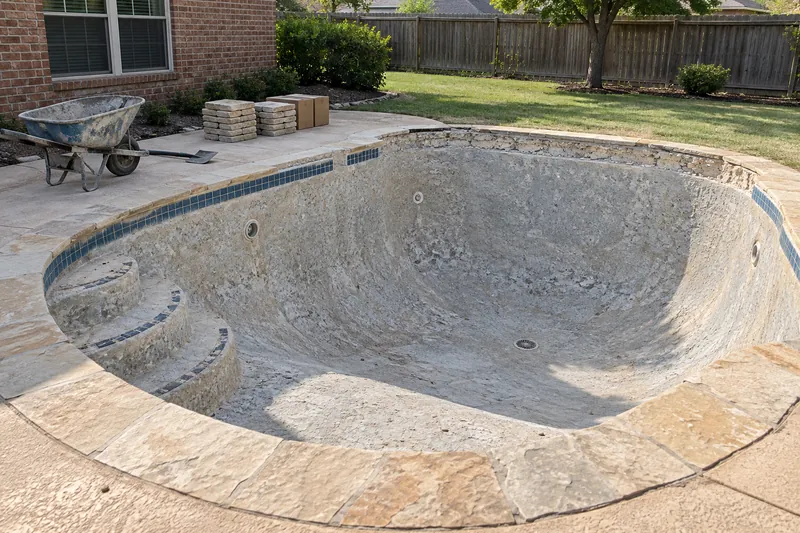
Pool remodeling and renovation
A remodel changes more than the finish: steps, benches, tile, coping, decks, equipment or the pool's shape. The National Plasterers Council lists a fresh new look, improved safety and repairs among the reasons owners take on pool remodeling.
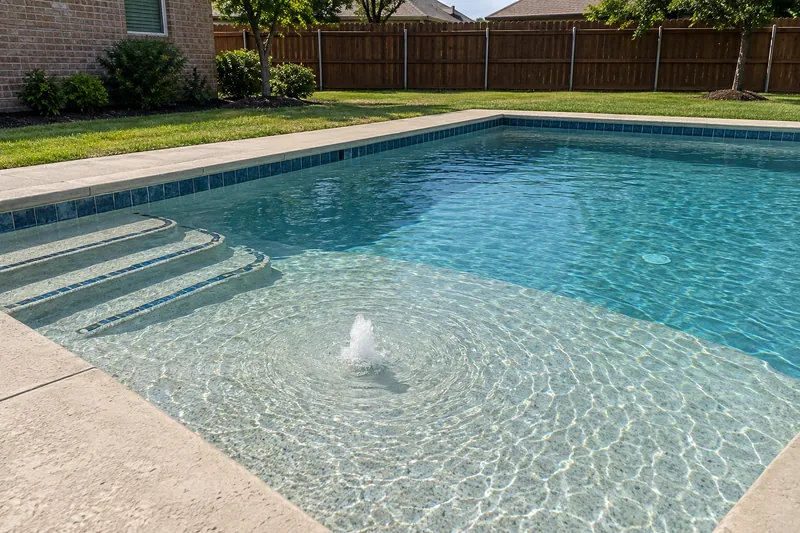
Tanning ledges and steps
Ledge Lounger, a maker of in-pool furniture, describes tanning ledges as shallow areas typically 6 to 9 inches deep. For backyard pools the code keeps underwater seats and benches within 20 inches of the waterline, and Rockwall adds a contrasting stripe at least 1 inch wide on the leading edge of each step.
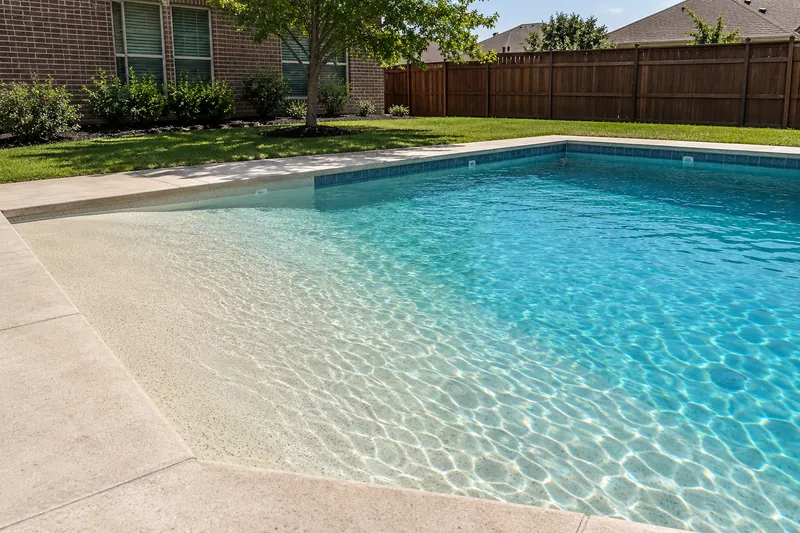
Beach entries
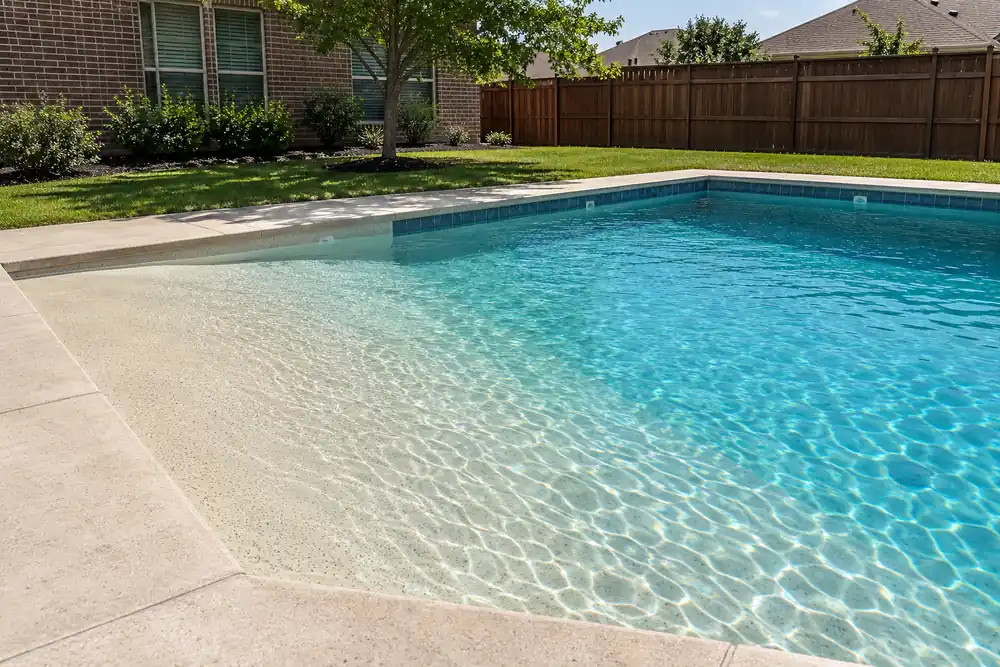
A beach, or zero-depth, entry slopes from deck level into the water. The code limits it to 1 unit of rise in 7 of run (14 percent) at a backyard pool and 1 in 10 at a public pool, which includes an HOA or apartment pool.
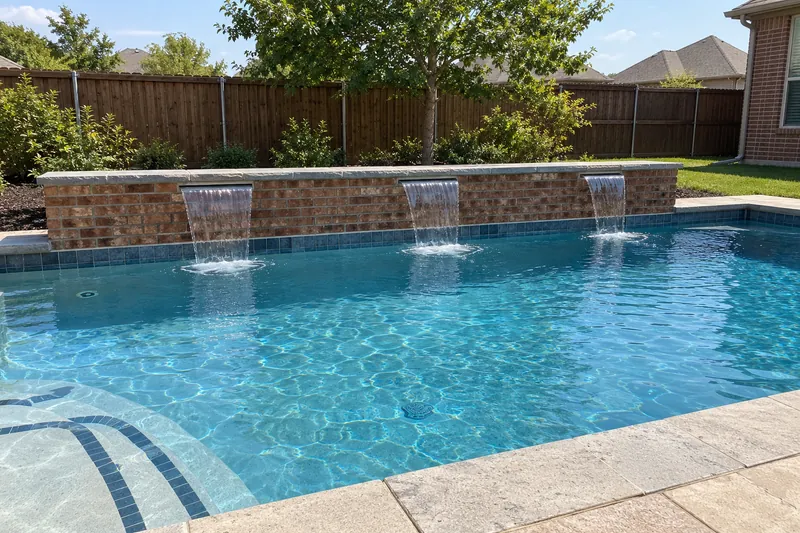
Water features and waterfalls
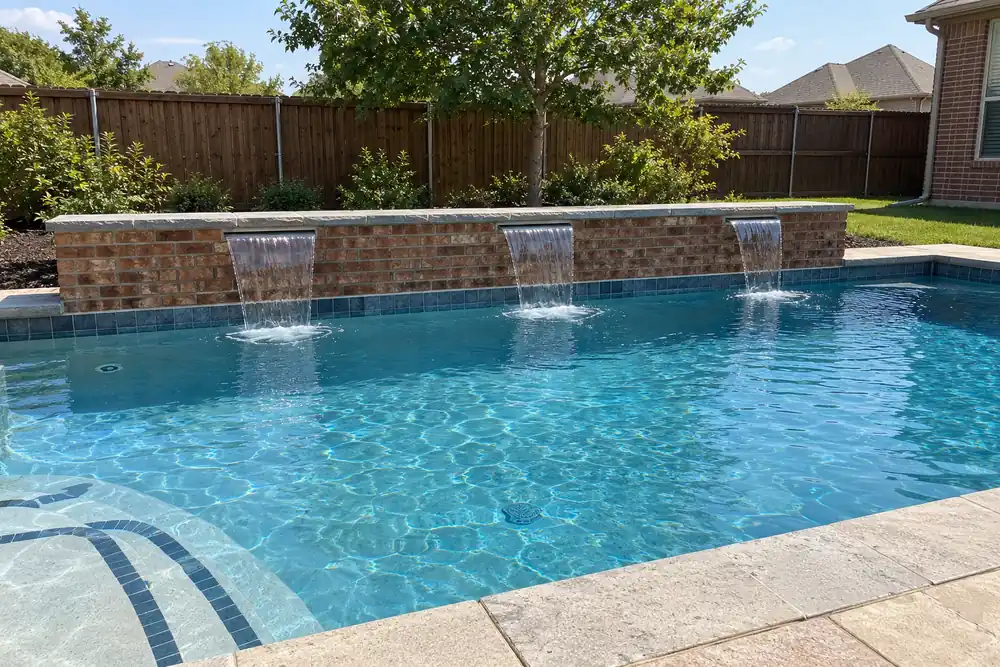
Pentair plans on about 15 gallons per minute for each foot of waterfall, so a 3-foot waterfall needs 45 GPM, and recommends no more than a 3-foot drop for a sheet waterfall, which starts to break apart above that.
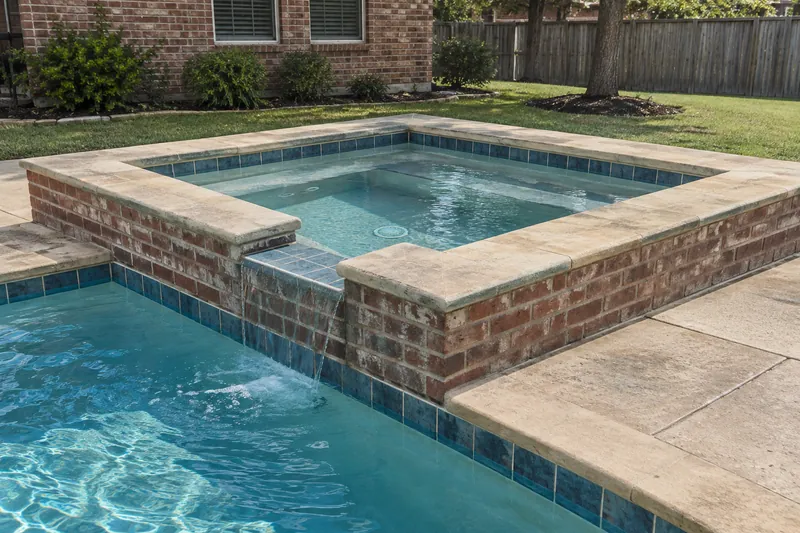
Adding a spa to a pool
A permanent backyard spa follows the code's spa rules: water no deeper than 4 feet, multilevel seats no deeper than 28 inches, and incoming makeup water held to 104°F.
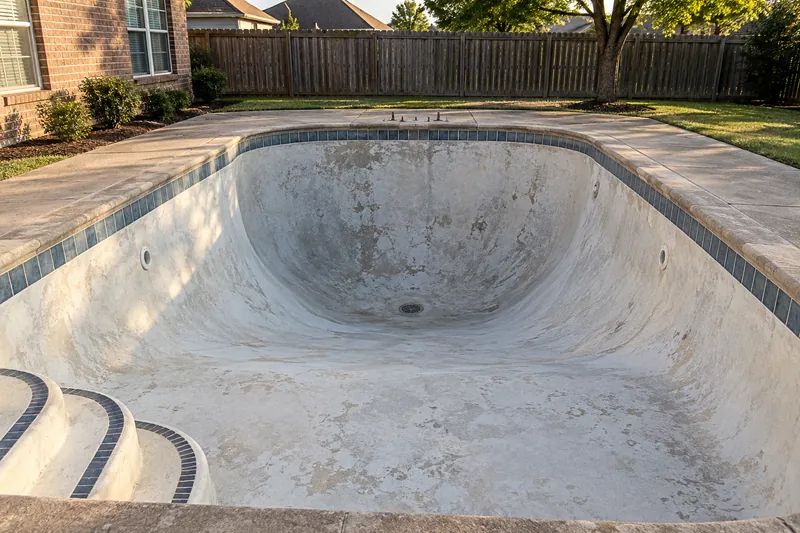
Diving pool conversions
The code classes backyard pools as Type O (nondiving) or Types I to V for diving equipment, and even the smallest diving type needs 6 feet 0 inches of water under the board tip. Manufactured diving equipment isn't allowed on a Type O pool.
Call or request a free estimate any time, 24/7.
(469) 653-0486Pool resurfacing finishes: pebble, plaster, quartz, polished and more
CL Industries, a pool finish maker, describes a finish as the plaster, tile or aggregate layer on top of the pool's concrete shell. The National Plasterers Council calls for a cement-based finish that averages at least 3/8 inch and no more than 3/4 inch thick.
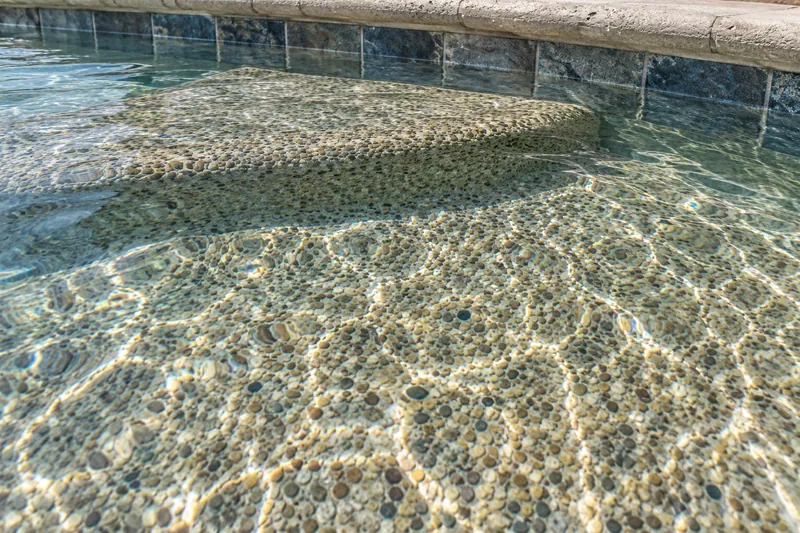
Pebble finishes
The National Plasterers Council calls pebble the most durable surface available, because river pebbles are chemically inert, and rates it a 12 to 18 year surface. Pebble Tec, Pebble Sheen, StoneScapes and other pebble pool finishes differ mainly in pebble size and texture.
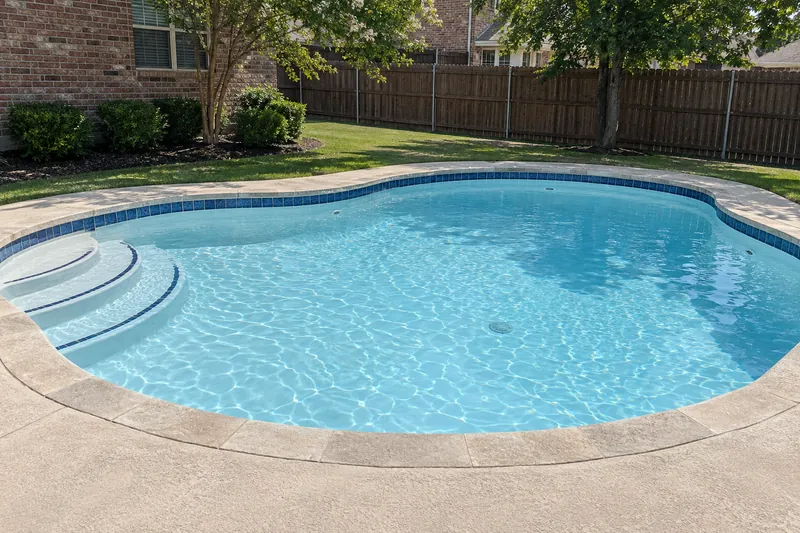
Pool replastering
Standard white plaster, a mix of white cement, white marble aggregate and water, is what the Council calls "the tried and true pool and spa surface finish": a 5 to 8 year surface and the most affordable finish on the market. Pool replastering also covers colored plaster, which shows mottling more than white does.
Fiberglass pool resurfacing and repair
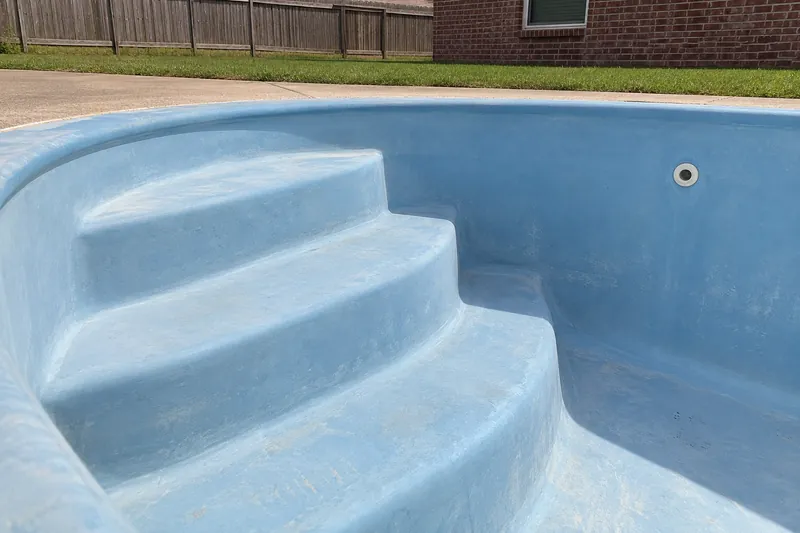
River Pools, a fiberglass pool maker, says a fiberglass pool isn't re-gelcoated in the backyard; the usual approach is a coating that bonds to the shell, applied in a few days. Latham's care manual warns that a fiberglass pool drained without relieving groundwater pressure will buckle and crack.
Quartz finishes
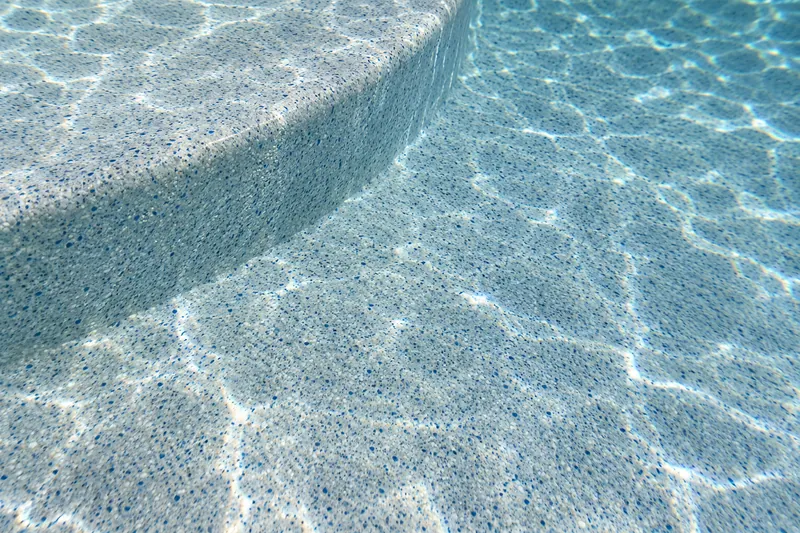
Quartz aggregates make plaster harder and far more resistant to changing water chemistry, the National Plasterers Council says, and it rates quartz a 10 to 15 year surface. SGM's Diamond Brite, a quartz finish, goes on 3/8 to 1/2 inch thick.
Polished finishes
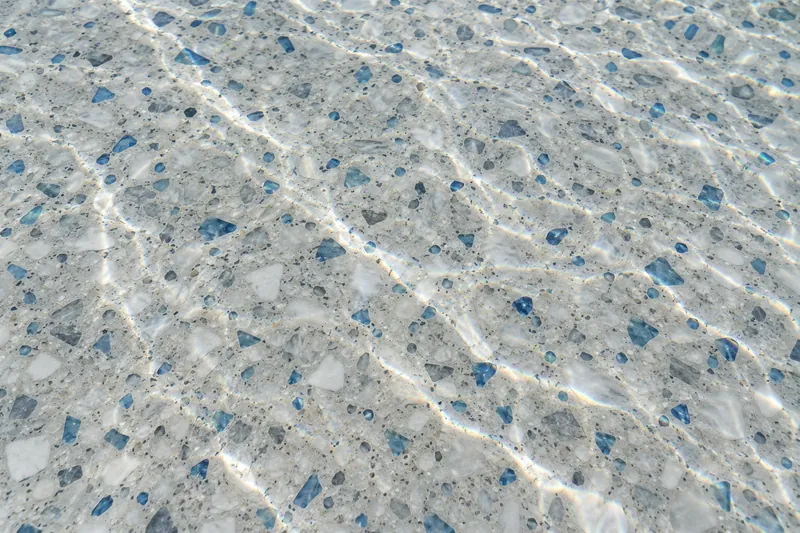
A polished finish reveals its aggregate with polishing tools as the last step, for a smooth surface with an exposed-aggregate look. The Council rates it an 8 to 12 year surface, and NPT says its PolishedScapes can be re-polished through its life.
Glass tile and all-tile pools
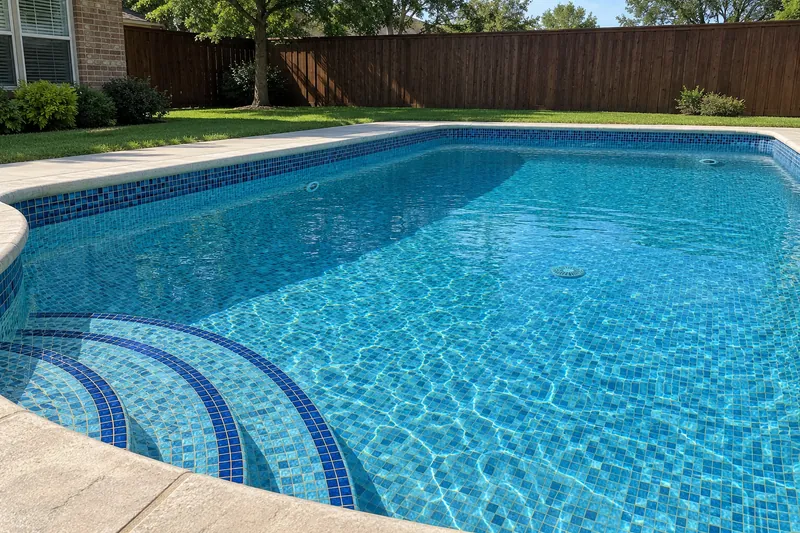
LATICRETE, a tile-setting materials maker, says porcelain and glass are the most common tiles under water because they absorb the least, that glass tile costs more and needs more installation expertise, and that glass tile should never go on a pool deck.
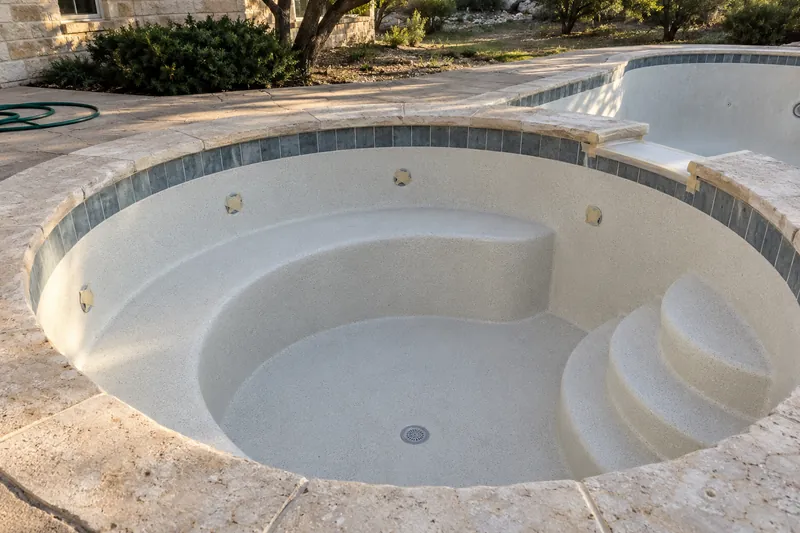
Spa resurfacing
Spas hold hotter water than pools, and LATICRETE notes that bromine is the preferred treatment for hot water. Benjamin Moore doesn't recommend its pool paints for spas or hot tubs at all.
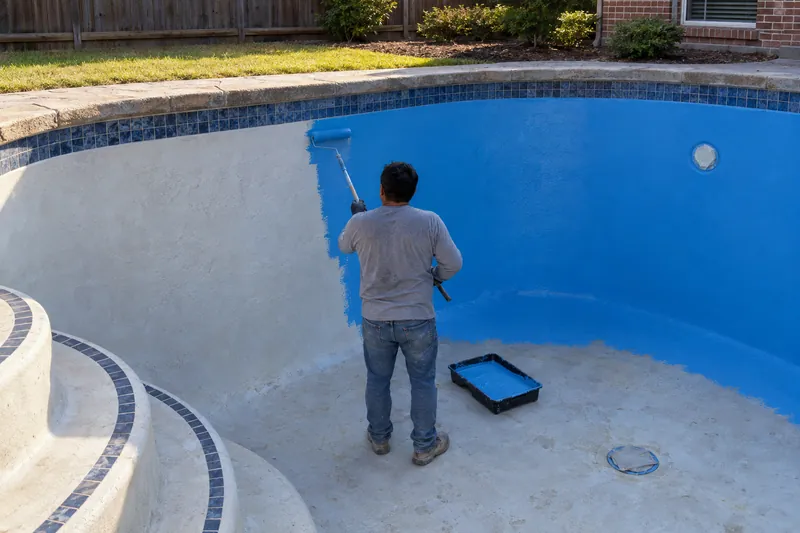
Pool painting
Benjamin Moore calls for two coats of pool paint, applied between 50°F and 85°F, and says the paint already on the pool decides which paint can go over it: epoxy only over epoxy, chlorinated rubber only over chlorinated rubber.
Call or request a free estimate any time, 24/7.
(469) 653-0486Waterline tile and pool coping
LATICRETE's pool design manual says tile goes at the waterline because floating oils and dirt form a scum line there and tile is easy to clean. Coping is the cap on the pool wall that finishes its edge.
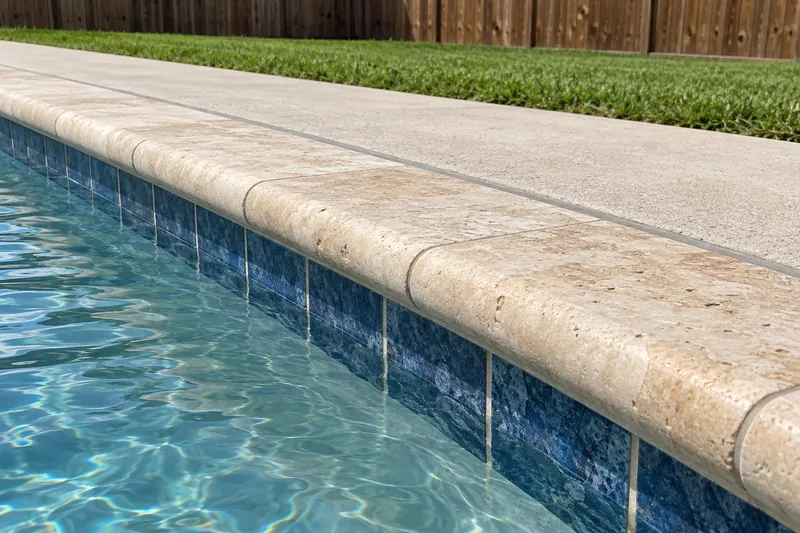
Pool coping replacement
Coping can be cast in place, precast, brick or stone. The 2021 code requires the joint where coping meets a concrete deck to protect the coping and its mortar bed from the deck's movement, and Unilock sets its coping with about a 2-inch overhang and a 2% slope away from the pool.
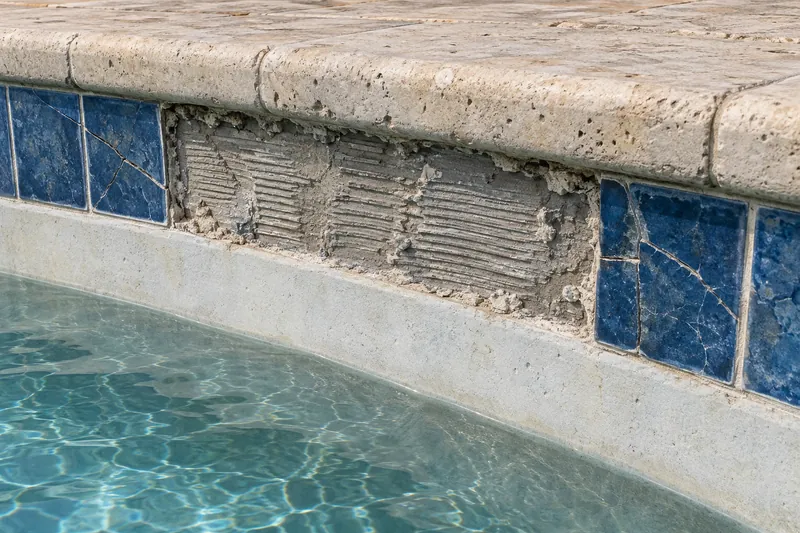
Pool tile repair and replacement
LATICRETE says pool tile is replaced only with the pool drained and dry, never under water. Tile between the waterline and the coping takes big temperature swings: dark tile can pass 120°F in direct sun just before a splash of 72°F water hits it.
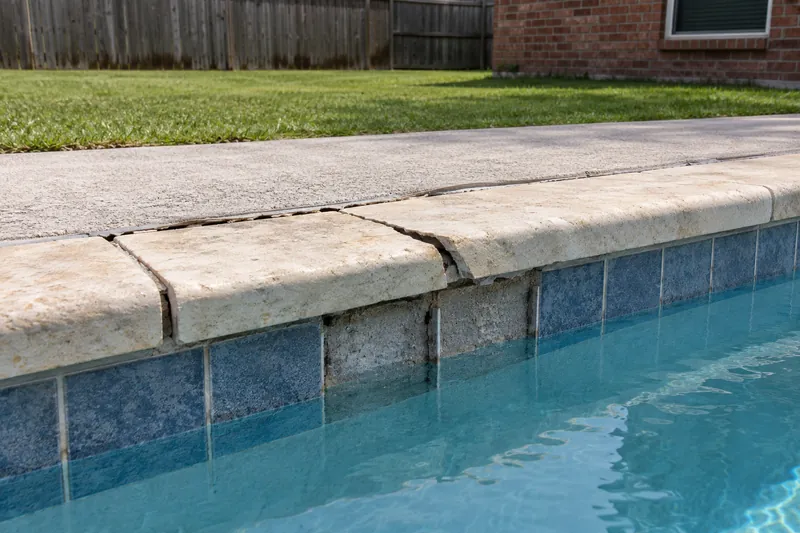
Pool coping repair
Marmiro Stones, a coping supplier, says a deck that moves with heat and settlement pushes on the rigid bond beam under the coping unless a gap and a flexible sealant sit between them, and the result is cracked or spalled coping.
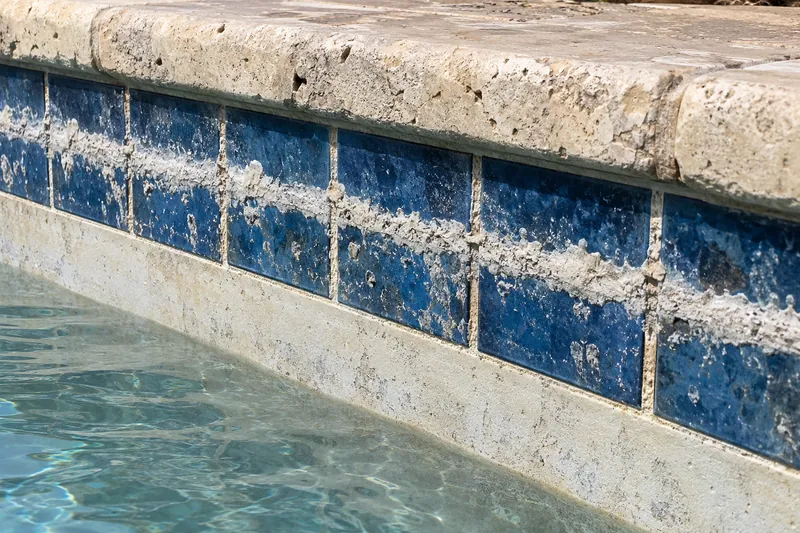
Tile cleaning and calcium removal
The white line on waterline tile is calcium scale left behind as water evaporates. Heavy scale may need media blasting, with media from glass bead to baking soda; Kramer Industries lowers the water about 6 inches below the tile and expects about two hours for a regular-size pool.
Call or request a free estimate any time, 24/7.
(469) 653-0486Pool decks, mastic and expansion joints
By our overlay of the NRCS soil map on the city's boundary, clays that crack and swell (Houston Black, Heiden and Ferris) cover 78.6 percent of the mapped area inside Rockwall, and the NRCS says Houston Black opens cracks 0.5 to 4 inches wide in dry spells. Decks, coping and the joints between them move with that ground.
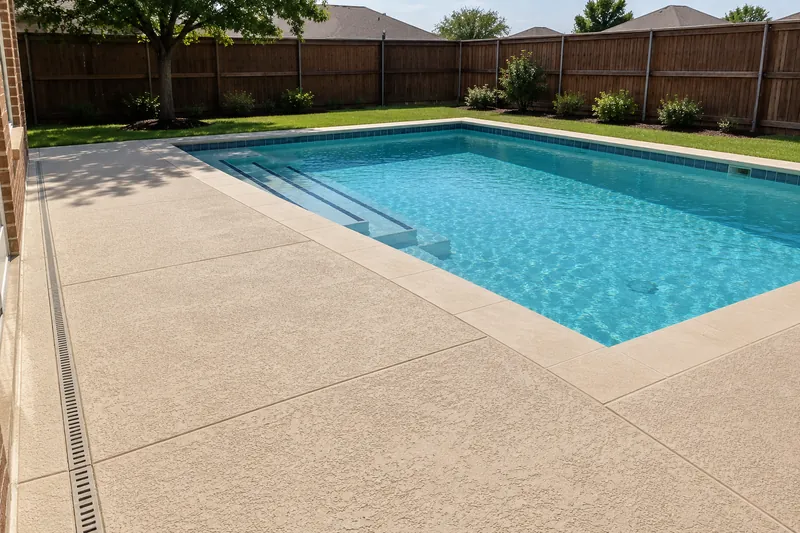
Pool deck resurfacing and repair
Mortex, which says it invented Kool Deck in 1962, applies its topping at 50 degrees and rising and not over 90, and says it bonds only to solid, clean concrete, not to tile, stone or loose old toppings.
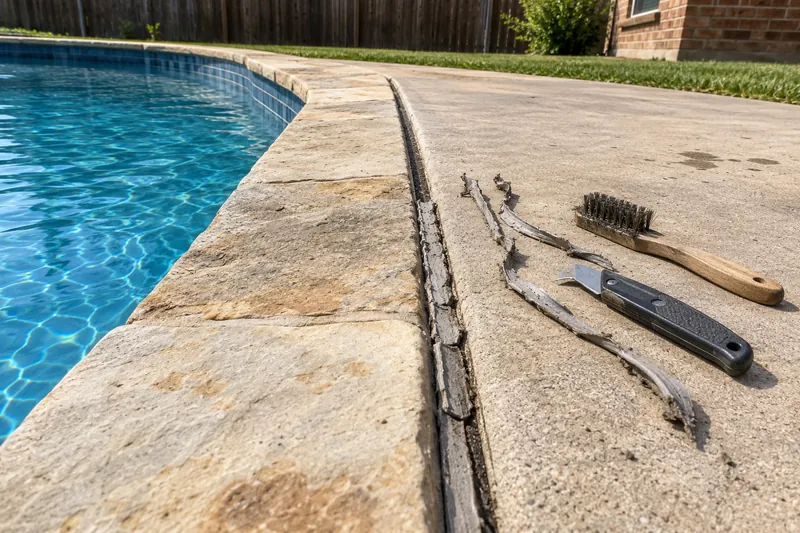
Pool mastic replacement
Mastic is the flexible sealant in the joint between coping and deck. Marmiro Stones calls for a continuous gap of 1/2 to 1 inch, a closed-cell foam backer rod about 3/8 inch below the surface and pool-grade elastomeric caulk about 1/4 to 3/8 inch deep; the supplier says most such caulks last five to ten years.
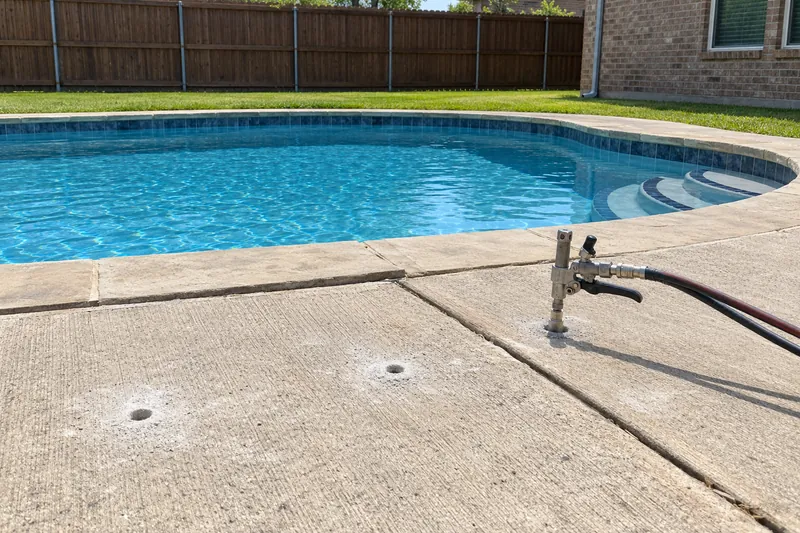
Pool deck lifting and leveling
Sunken slabs are raised by mudjacking, which pumps a cement-based material through holes drilled in the slab, or with polyurethane foam. Alchatek, a foam maker, says injected foam fills the voids and compresses the soil before it starts to lift the slab.
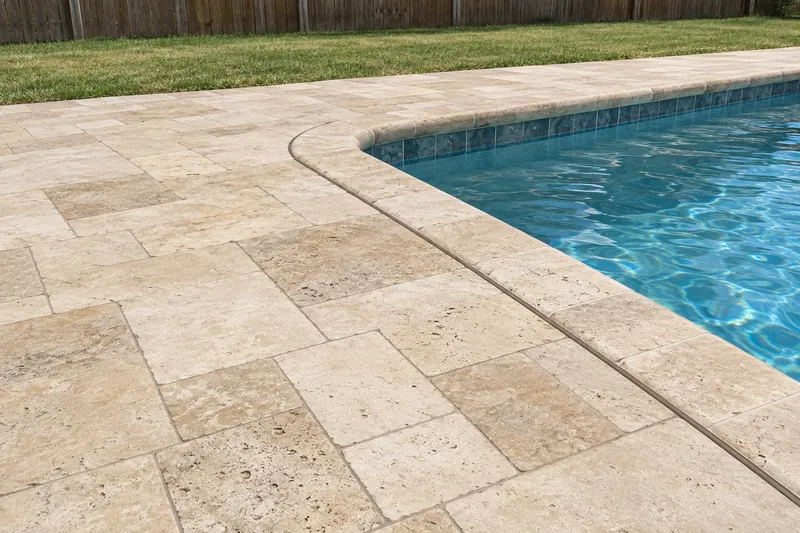
Travertine and paver pool decks
Travertine is a limestone, a calcium carbonate stone that mild acids can etch, the Natural Stone Institute says. The Interlocking Concrete Pavement Institute typically sets pavers around pools on a concrete base at least 4 inches thick where the backfill soil can't be compacted well enough.
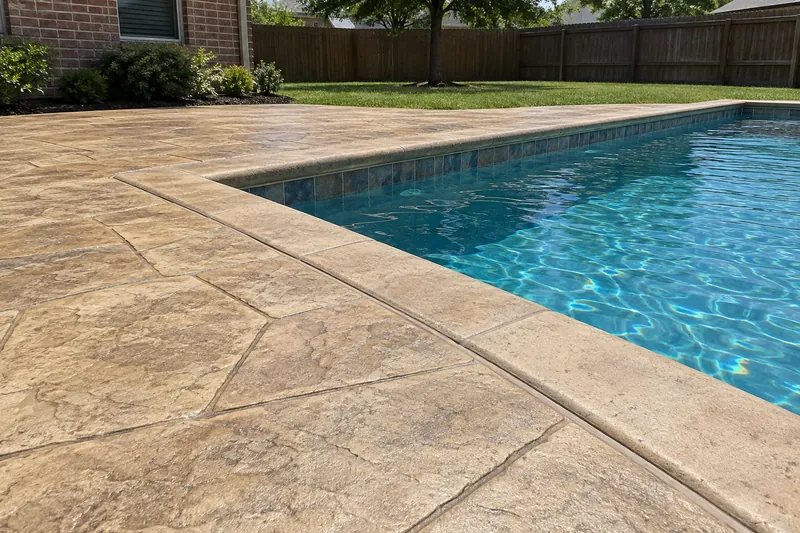
Stamped concrete pool decks
Brickform colors stamped concrete three ways: integral color mixed in the truck, color hardener broadcast onto the fresh concrete, or stains. It recommends resealing generally every two to three years.
Call or request a free estimate any time, 24/7.
(469) 653-0486How pool resurfacing works, from drain-down to start-up
The steps the finish makers and the National Plasterers Council set out; we'll talk through each one for your pool.
Drain the pool under Rockwall's rules
The City's storm-water ordinance bans filter backwash, and pool water that hasn't been dechlorinated or has a pH below 6.5 or above 8.5, from streets and drains. River Pools, a pool maker, warns that groundwater can push up on an empty shell, and that clay holds water in the ground longest.
Prepare the old surface
SGM's manual sounds out hollow plaster and cuts 3 inches outside each hollow spot, undercuts the old plaster 2 inches back from tile and fittings and 3/8 inch deep, and stops any groundwater seeping through the shell.
Bond coat or chip-out
Over sound old plaster, makers such as SGM require their bond coat before the new finish. Pebble Technology International's remodel process strips the old surface instead, and going from pebble to a smoother quartz finish means chipping the pebble out first.
Apply the new finish
The finish is placed and finished in one single application: a scratch coat on the deep-end bowl first, then the walls from the shady side toward the sunny side, to an average of 3/8 to 3/4 inch.
Fill and start up
The fill runs without a stop to the middle of the skimmer, which NPT says can take 18 to 36 hours. The National Plasterers Council's start-up then runs 28 days, with the whole pool brushed at least twice a day at first.
Call or request a free estimate any time, 24/7.
(469) 653-0486Which pool finish lasts longest: plaster, quartz, polished or pebble
The National Plasterers Council's finish comparison gives each finish a surface life:
Sources differ on plaster. The same Council's owner page says plaster can last up to 20 years with proper care, and Universal White Cement, a white-cement maker, says good white plaster "should routinely deliver 15–20 years of service, and often more." The Council calls balanced water "the most critical care item" for any cement-based finish.
Color matters too. CL Industries says the finish's background color is the single greatest factor in water color: white, blue, black or gray finishes give blue water; green, brown or tan give green. SGM and Premix-Marbletite add that light finishes keep water cooler and dark ones hold heat, worth weighing where Lavon Dam, the nearest NOAA station with temperature normals, averages 94.8 days a year at 90°F or above (1991–2020).
Call or request a free estimate any time, 24/7.
(469) 653-0486How much does pool resurfacing cost around Rockwall?
No published price list covers Rockwall alone, so these are typical Dallas–Fort Worth figures. In Dallas, pool resurfacing averaged $11,341 in 2026, with most homeowners spending $6,186 to $15,465; pool size, the finish and the type of pool move the price most.
- Plaster finish, many pools
- $4,000–$7,000+
- Quartz finish
- $5,000–$10,000+
- Pebble finish
- $7,000–$15,000+
- Tile finish
- $8,000–$30,000+
- Fiberglass pool, complete refinishing
- $8,000–$15,000
- Pool remodel, typical range
- $5,209–$14,520
- Coping replacement, full
- $3,000–$12,000+
- Waterline tile, full replacement
- $1,200–$3,600
- Pool deck resurfacing, per sq ft
- $3–$10
- Mastic replacement, per linear ft
- $7.50–$13.75
Published Dallas–Fort Worth figures for 2026. Averages, not quotes from Rockwall Pool Resurfacing.
The pool's condition (cracks, hollow spots, bond problems), steps, benches, spas and access for crews also move a price, Dallas–Fort Worth pool companies say. Commercial replasters are priced by surface area: about $6.50 to $8.00 per square foot nationally in 2026, or $24,000 to $36,000 for a large 3,000 sq ft pool.
Two costs are Rockwall's own. The City's 2026 fee schedule lists $300.00 for an in-ground pool permit; whether a resurface needs one is for the City to say. And at the City's 2026 residential water rates, refilling 15,000 gallons comes to $64.55 in volume charges if the refill is the home's only water use that month (our arithmetic); refill water billed in December, January or February also raises the winter average that the sewer charge is based on.
Call or request a free estimate any time, 24/7.
(469) 653-0486Pool plaster, crack and leak repairs
Not every worn pool needs a new finish; these repairs fix one problem at a time.
Pool plaster repair
Universal White Cement finds hollow plaster by tapping it every foot or two: bonded plaster sounds crisp, delaminated plaster dull or drum-like. Small, isolated hollow spots can sometimes be chipped out and patched; hollow areas across several zones point to a bond problem across the pool.
Pool crack repair
Torque Lock, a maker of crack-repair staples, says structural cracks run through the shell and usually show through the plaster and even the tile on the bond beam, while cracks in the plaster alone are mostly a maintenance issue. It names clay "expansive" soils among the most problematic causes.
Pool leak detection and repair
The U.S. Environmental Protection Agency says a pool losing more than 2 inches a week, or 3 inches in hot, dry areas, likely has a leak, and gives a bucket test that compares evaporation with the pool's own water loss.
Pool drain and acid wash
Universal White Cement advises against frequent drain-and-acid washes, which it says strip years off plaster, and the EPA says a well-maintained pool should only need draining every 3 to 7 years to keep dissolved solids down.
Call or request a free estimate any time, 24/7.
(469) 653-0486What Rockwall's housing, clay, water and weather mean for a pool
Homes from the 2000s boom and older lakeside neighborhoods
The City authorized 4,739 new single-family homes from 2000 through 2005, peaking at 892 in 2004, according to the Census Bureau's building permits survey, and the median Rockwall home was built in 2003. By our arithmetic, a pool built with a 2000s home is now about 17 to 26 years old. The older housing is around Lake Ray Hubbard: the City's comprehensive plan dates Chandler's Landing from the late 1970s, Lakeside Village from the 1980s to the mid-2000s, Turtle Cove from the 1990s and The Shores from the 1990s and early 2000s.
Blackland clay under decks, coping and shells
Rockwall County sits on the Blackland Prairies. The 1977 soil survey for Kaufman and Rockwall Counties says shrinking and swelling "causes much damage to building foundations, roads, and other structures", and the NRCS rates the Heiden clay at the city's center point "Very limited" for shallow excavations because the excavation walls are unstable. The 2021 pool code meets that movement with watertight isolation joints where coping meets a concrete deck.
North Texas water for the fill
Rockwall's water comes from the North Texas Municipal Water District's Wylie plant, which treats a blend of Lavon Lake and Lake Texoma water. The City's 2025 report lists total alkalinity up to 138 ppm and total dissolved solids up to 455 ppm, the district's plant figures, and the water is disinfected with chloramines; each spring the district switches to free chlorine for about a month (March 2 to 30 in 2026). The National Plasterers Council says to fill with clean drinking-quality water, never softened or reverse-osmosis water.
Summer heat, winter freezes and plastering days
At Lavon Dam the 1991–2020 normals give 94.8 days a year at 90°F or above and 44.4 nights at or below freezing, with the median last spring freeze on March 10 and the first fall freeze on November 19. Rockwall's airport station fell to -1°F on February 16, 2021. The National Plasterers Council names wind as the dominant factor in shrinkage cracking, and Pebble Technology International accepts cold-weather plastering when the daily average is above 40°F and the shell isn't frozen.
Drought stages and refill rules
Rockwall's drought plan has three stages, tied mainly to how full Lavon and Bois d'Arc lakes are. Stage 1 only encourages owners to drain and refill pools less often; Stage 3 can ban draining and refilling except to keep a pool structurally sound, for proper operation and maintenance, or to remove a safety risk. As of October 4, 2026, no stage was named on the official pages checked; before draining, check the current stage with the City.
City permits and HOA review
The City of Rockwall has adopted the 2021 International Swimming Pool and Spa Code and answers permit questions through its Building Inspections Department. In Chandlers Landing, the association must approve a pool project before work starts, and contractors may work 7:00 a.m. to 6:00 p.m. on weekdays and 8:00 a.m. to 5:00 p.m. on Saturdays.
Our service area: Rockwall, Fate, Heath, McLendon-Chisholm, Rowlett, Lavon, Royse City, Travis Ranch, Sachse, Nevada, Wylie, Sunnyvale, Garland, St. Paul, Union Valley, Poetry, Murphy, Forney, Josephine, Seis Lagos, Mesquite and Parker.
Call or request a free estimate any time, 24/7.
(469) 653-0486Pool resurfacing questions from Rockwall pool owners
What is the average cost to resurface a pool?
In Dallas, pool resurfacing averaged $11,341 in 2026, with most homeowners spending $6,186 to $15,465, and national averages in 2025 ran $6,000 to $15,000. Pool size, the finish and the type of pool move the price most, so a firm number needs a look at the pool; our estimates are free.
What is the cheapest way to resurface a pool?
Paint costs least. National averages in 2025 put pool paint at $1 to $2 per square foot against $6 to $8 for plaster, and typical Dallas–Fort Worth figures for 2026 put paint at around $1 per square foot, lasting two to five years. Among cement-based finishes, the National Plasterers Council calls standard white plaster the most affordable on the market.
What is included in pool resurfacing?
Draining under the City's rules, removing hollow plaster and undercutting at tile and fittings, a bond coat or a chip-out, the new finish at an average of 3/8 to 3/4 inch, a fill without a stop and the 28-day start-up. Dallas–Fort Worth pool companies add that waterline tile, coping and mastic repairs are often done while the pool is empty.
What time of year is best to resurface a pool?
No standard limits the air temperature for plastering, the National Plasterers Council says; hot days call for an early start and a pre-soaked shell, and wind is the main driver of shrinkage cracking. In cold weather, Pebble Technology International allows plastering when the daily average is above 40°F, and NPT keeps a new finish from freezing for its first 48 hours. Around Rockwall, Lavon Dam's normals put the median last spring freeze on March 10 and the first fall freeze on November 19.
How much does it cost to resurface a 20,000 gallon pool?
Resurfacing is priced by the pool's surface area and finish, not by gallons, so the Dallas average of $11,341 in 2026 is the nearest guide. The water is easier to price: typical Dallas–Fort Worth figures for 2025 put draining a 20,000-gallon pool at $175 to $225, and refilling 20,000 gallons at the City of Rockwall's 2026 residential rates comes to $99.88 in volume charges if it's the home's only water use that month (our arithmetic).
What's the difference between resurfacing and replastering a pool?
Replastering puts a new plaster finish (white cement, marble aggregate and water, with or without pigment) on the pool. Resurfacing is the wider job: a new interior finish of any kind, from plaster to quartz, pebble, polished or tile, or a coating on a fiberglass pool. CL Industries says pool finishes have moved from paint and marcite to pre-blended quartz, pebble and marble products.
What is the average cost to replaster a pool in Texas?
Texas figures published for 2025 put pool resurfacing at $5,000 to $15,000 on average and white plaster at $4,000 to $7,000. Closer to Rockwall, typical Dallas–Fort Worth prices for standard white plaster in 2026 run $5,000 to $7,500.
Is it worth resurfacing a pool?
That depends on the surface. The National Plasterers Council says every pool finish changes with the water it sits in, and that white plaster moves over its life from slight shading or scaling to staining, etching, cracking or, in extreme cases, delamination. A new finish replaces a surface that has gone that far.
What is the best material for resurfacing a swimming pool?
By the National Plasterers Council's ratings, pebble: it calls pebble the most durable surface available, because river pebbles are chemically inert, and gives it the longest surface life of the four cement-based finish types. It also says any of the options can give years of reliable performance in a well-made and well-maintained pool.
What is the most effective sealant for repairing pool cracks?
It depends on the crack. The American Shotcrete Association recommends a product that fills the crack and tolerates future thermal movement rather than a brittle one. Sika says its Sikadur-35 epoxy is for cracks in structural concrete but not for cracks under hydrostatic pressure, and Prime Resins recommends a water-seeking (hydrophilic) polyurethane for injecting wet cracks. For a structural crack in the shell, Torque Lock's method grinds a channel along the crack and sets staples across it about every 12 inches.
How long does pool resurfacing take?
One Dallas pool company puts the job at 5 to 10 days, and NPT says the fill alone can take 18 to 36 hours. After the fill, the National Plasterers Council's start-up runs 28 days; SGM says to wait until the pool is filled and the water balanced, typically three days, before swimming.
Do you need a permit to resurface a pool in Rockwall?
Ask the City first. Rockwall lists swimming pools among the projects that need a permit, and Texas law applies a city's pool code to repairs as well as new pools. The City's no-permit list covers "painting, papering, tiling" and similar finish work but doesn't mention pool resurfacing, and its pool guidelines are written for new pools, so the City hasn't said whether a replaster counts. Ask the City's Building Inspections Department before work starts.
Can I drain my pool into the street in Rockwall?
Only dechlorinated water. Rockwall's storm-water ordinance bans filter backwash, and pool water that hasn't been dechlorinated, has a pH below 6.5 or above 8.5, or causes flooding or damage, from streets, alleys and drains, with civil penalties of up to $2,000 per violation per day. The Texas Commission on Environmental Quality lets owners reuse drain water on their own landscaping, but not within five days of adding shock or acid, and not where it runs off the property.
How does Rockwall's water affect a new pool finish?
The City of Rockwall's 2025 water report lists total hardness of 96.0 to 200 ppm and a pH of up to 8.8; those are the North Texas Municipal Water District's plant figures. The National Plasterers Council recommends fill water above 200 ppm calcium hardness for most cement-based finishes, never softened or reverse-osmosis water, and says testing the fill water should "no longer be an option."
Do you resurface HOA and apartment pools in Rockwall?
Yes, and they follow different rules from backyard pools. Under the Texas health rules, HOA and apartment pools are Class C public pools that must be run under a trained and certified pool operator, and the City of Rockwall's operating permit application asks for that operator's certification. Under the City's public pool code, a pool closed for 30 days or longer needs a pre-opening inspection before it reopens.
Get a free pool resurfacing estimate in Rockwall
Rockwall Pool Resurfacing answers calls and estimate requests 24/7. Tell us the pool's size, its finish now and what you want changed.