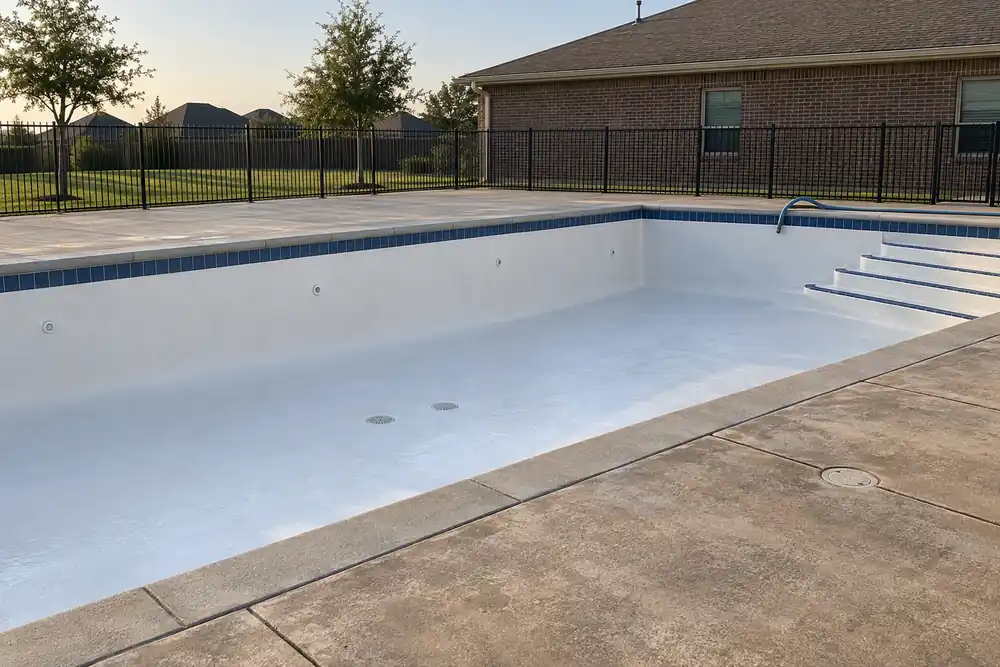
Pool Replastering in Rockwall, TX
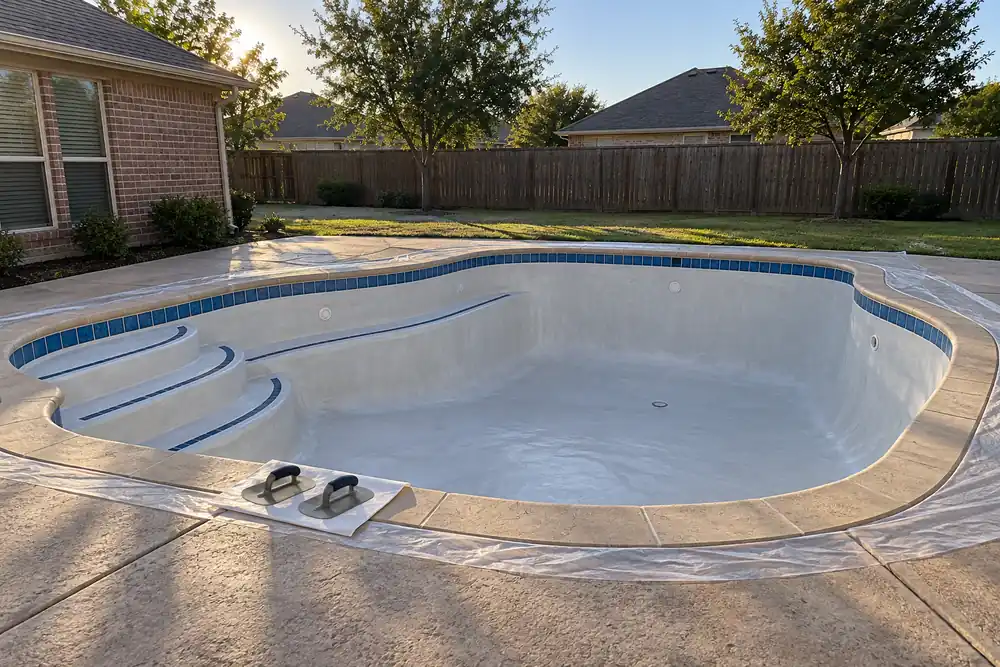
Rockwall Pool Resurfacing handles pool replastering in Rockwall, Texas: white plaster (marcite), colored plaster and enhanced plasters, applied over a bond coat on sound old plaster or after a full chip-out. The National Plasterers Council calls standard white plaster "the tried and true pool and spa surface finish", a simple mix of white cement, white marble aggregate and water, and the most affordable finish on the market.
The Council rates white plaster a 5 to 8 year surface, and the median Rockwall home was built in 2003, according to the Census Bureau's 2020–2024 American Community Survey. A new plaster finish here is filled with North Texas Municipal Water District water, so we'll talk through the fill and the 28-day start-up along with the price. Estimates are free, and calls are answered 24/7.
Call or request a free estimate any time, 24/7
Get free estimates
No charge · answered 24/7
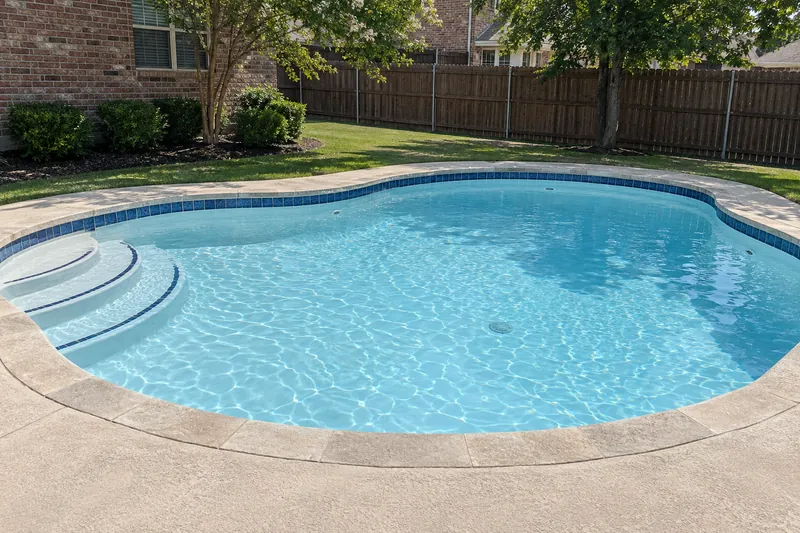
White and colored pool plaster: what goes into the mix
CL Industries describes plaster as water, Portland cement and either marble dust or silica sand, hard-troweled to a smooth finish. A bulletin from the National Plasterers Council and the Portland Cement Association says pool plaster uses white cement, which typically holds 0.4% or less iron oxide against 2.6% for gray cement, for clean, bright and consistent colors.
White plaster (marcite)
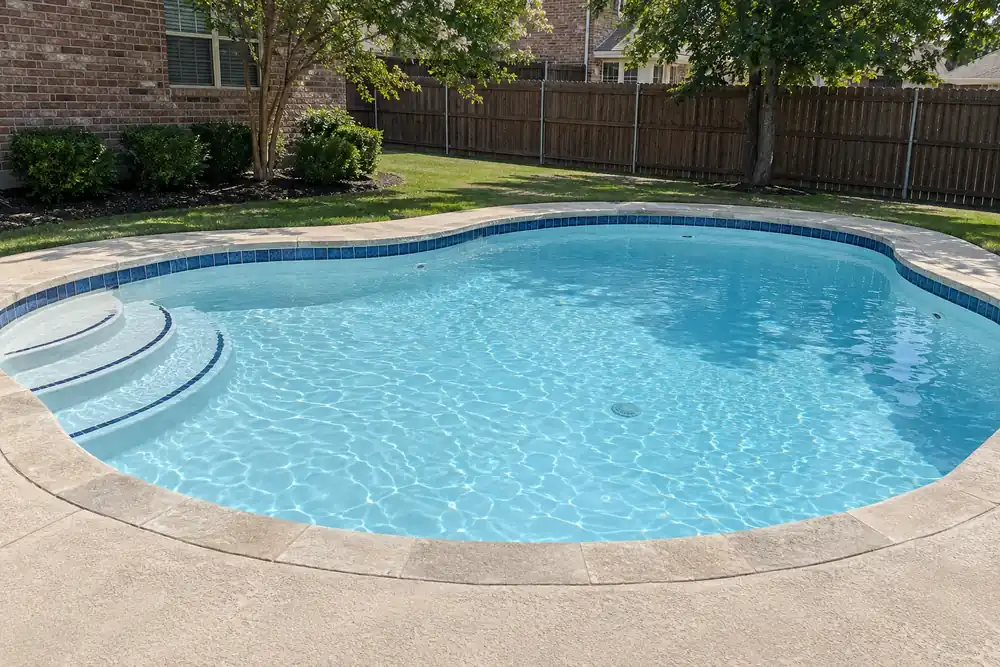
A white plaster pool looks brilliant, clean and light blue when filled and is very smooth to the touch, the Council says, but white plaster is a relatively soft finish, more affected by water chemistry than newer products, and its look will change over its life. SGM's Ultra Pearl Brite, a pre-blended white plaster, covers about 22 to 25 square feet per 80 lb bag at 3/8 to 1/2 inch.
Colored plaster
Pigment accentuates everything white plaster shows: mottling can be more pronounced, and streaks, uneven color, checking and crazing more noticeable, and the mixed color differs from the sample chips and may lighten over time. NPT sells PlasterScapes pigments in 10 colors, its deep colors at twice the pigment strength, and Premix-Marbletite says a color sample set in 6 inches of water shows the approximate final finish.
Pozzolans and enhanced plasters
Pozzolan additives lock up calcium hydroxide, plaster's weakest element, and have been shown to reduce etching, cracking and mottling, though the Council says they add cost and aren't fool-proof. A step further, Wet Edge's Altima replaces 35% of the marble sand with quartz, and full quartz pool finishes and pebble pool finishes rate longer still: 10 to 15 and 12 to 18 years in the Council's comparison. The guide to pool finishes compared sets them side by side.
Call or request a free estimate any time, 24/7.
(469) 653-0486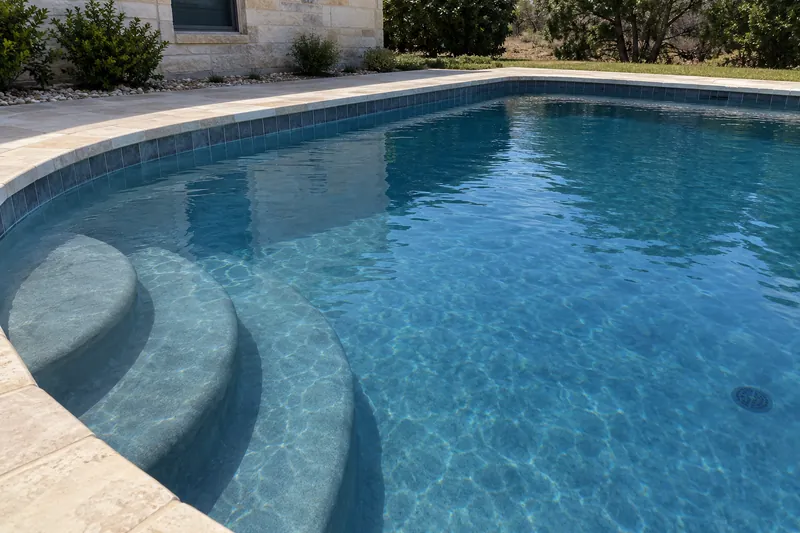
Replastering over old plaster or chipping it out
Universal White Cement, a white-cement maker, lists the warning signs of delaminating plaster: raised or blister-like spots, odd patches near lights, returns, tile lines, steps and benches, and circular or spider cracks centered on one patch. Small, isolated hollow spots can sometimes be handled with pool plaster repair instead; hollow areas across several zones point to a bond problem across the whole pool.
Preparing the old plaster
SGM's manual sounds out the old surface, saws a cut 3 inches outside each hollow spot and removes the loose plaster, undercuts the old plaster 2 inches back and 3/8 inch deep at tile and fittings, and stops any groundwater seeping through the shell. CL Industries adds that the causes of old stains, such as metal fittings and metallic algaecides, should be corrected first.
Bond coat over sound plaster
SGM's Bond Kote, two 65-lb bags of dry mix and five gallons of resin, mechanically bonds new plaster to old. It is rolled on to at least 80 mil wet, cures at least six hours, needs 50°F to 100°F for 24 hours before and after, and the plaster must follow within 14 days. SGM won't warrant its finish over any other bonding material, and Premix-Marbletite calls its own bond coat "absolutely mandatory on all pool renovations."
Full chip-out
Pebble Technology International's remodel process strips the existing surface instead, and SGM says a bond coat may not be needed where the old finish was chipped or sandblasted off. Rockwall Pool Resurfacing will talk through whether your plaster can take a bond coat. Draining has a cost of its own, too: Universal White Cement advises against frequent drain and acid wash jobs, which it says strip years off plaster.
Call or request a free estimate any time, 24/7.
(469) 653-0486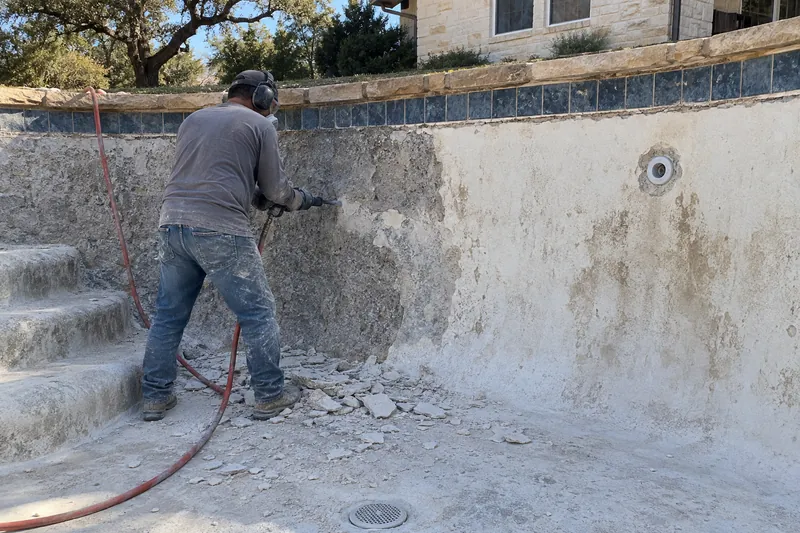
Plastering day, the fill and the 28-day start-up
The National Plasterers Council calls for a finish that averages 3/8 to 3/4 inch thick, troweled no rougher than 220-grit sandpaper, though steps and benches shouldn't be overly smooth. SGM puts the scratch coat on the deep-end bowl first and works the walls from the shady side toward the sunny side.
The fill
White plaster without modifiers should be filled as soon as possible after it sets, the Council says, with clean drinking-quality water, never softened or reverse-osmosis water, running without a stop to the middle of the skimmer; a break can leave a discolored "bowl ring". NPT says a fill can take 18 to 36 hours.
The start-up card
The Council's start-up card brings total alkalinity to 80–100 ppm and pH to 7.2–7.6 on day 1, adds no chlorine for 48 hours, runs the filter nonstop for seven days, brushes the whole pool at least twice a day and raises calcium hardness slowly to at least 200 ppm from day 4. The heater stays off until the plaster dust is gone, and wheeled cleaners stay out for 28 days.
Rockwall's fill water
The City of Rockwall's 2025 water report lists total hardness of 96.0 to 200 ppm, total alkalinity up to 138 ppm and pH up to 8.8, the North Texas Municipal Water District's plant figures. The Council recommends fill water above 200 ppm calcium hardness, says its start-up steps may need changing for unusual fill water, and tests and records the fill water before the start-up begins.
Call or request a free estimate any time, 24/7.
(469) 653-0486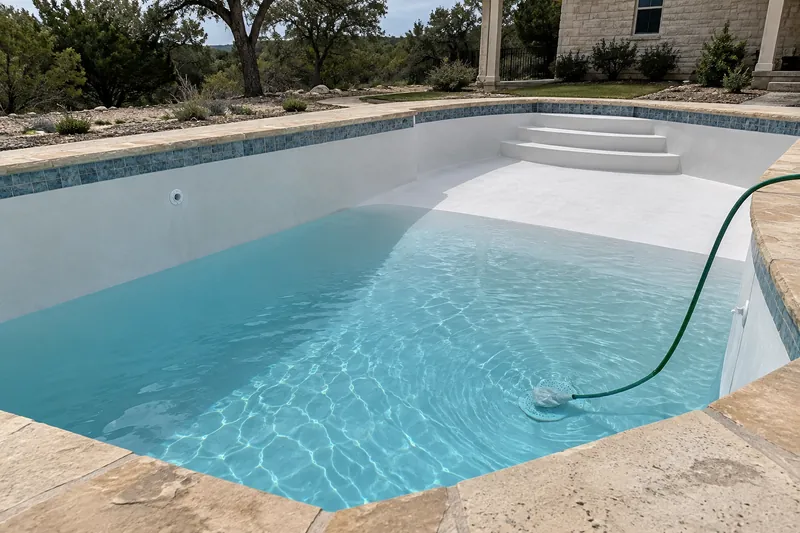
Replastering weather, draining and refill rules in Rockwall
No standard limits the air temperature for plastering, the Council says, but hot days bring a shorter set time and faster drying, and wind is the dominant factor in shrinkage cracking: on a 100°F day the critical level isn't reached until sustained wind passes 5 mph, while a mild 75°F day can pass it with 12–13 mph winds. Lavon Dam, the nearest NOAA station with temperature normals, averages 14.8 days a year at 100°F or above, and its median last spring freeze is March 10. The guide on when to resurface a pool in Rockwall covers the seasons.
Draining under City rules
Rockwall's storm-water ordinance bans filter backwash, and pool water that isn't dechlorinated or has a pH outside 6.5 to 8.5, from streets, alleys and drains. Under Stage 3 of the City's drought plan, draining and refilling can be banned except to keep a pool structurally sound or for proper operation and maintenance; as of October 4, 2026, no stage was named on the official pages checked.
What the refill water costs
At the City's 2026 residential rates, refilling 15,000 gallons comes to $64.55 in volume charges and 20,000 gallons to $99.88, if the refill is the home's only water use that month (our arithmetic). Because the sewer charge is set by December-to-February use, a refill billed from March through November doesn't change it.
West of Rockwall, Rockwall Pool Resurfacing also handles pool replastering in Garland.
Call or request a free estimate any time, 24/7.
(469) 653-0486Pool replastering cost in the Dallas–Fort Worth area
Pool size, shape, steps and the old plaster's condition move the price, and pigment adds to it. These are typical Dallas–Fort Worth figures:
- Standard white plaster
- $5,000–$7,500
- Plaster finish, many pools
- $4,000–$7,000+
- Replastering, per 1,000 sq ft
- $5,671
- Replastering, typical range
- $5,000–$15,000
Published Dallas–Fort Worth figures for 2026. Averages, not quotes from Rockwall Pool Resurfacing.
Colored plaster runs higher: national figures for 2026 put it at $5 to $8 per square foot, against $4 to $7 for white marcite. A firm price needs a look at the pool; Rockwall Pool Resurfacing gives that estimate free, and the guide to pool resurfacing cost in Rockwall compares the other finishes.
Call or request a free estimate any time, 24/7.
(469) 653-0486Pool replastering questions and answers
How much does it cost to plaster a pool?
Typical Dallas–Fort Worth figures for 2025 put concrete pool replastering at $6.50 to $8.00 per square foot, or $6,500 to $8,000 for a standard 1,000 sq ft pool, with standard white plaster at $4 to $5 per square foot. National averages in 2025 ran $6,000 to $8,000 for standard plaster. Rockwall Pool Resurfacing gives a free estimate once it has seen the pool.
How long should a pool replaster last?
Sources differ. The National Plasterers Council's finish comparison rates white plaster a 5 to 8 year surface, while the same Council's FAQ says plaster can last up to 20 years with proper care, and Universal White Cement says good white plaster should routinely deliver 15 to 20 years. All of them tie it to the materials, the workmanship and balanced water.
Can you plaster over old plaster in a pool?
Yes, if the old plaster is sound. Hollow and delaminated areas are cut out first, and the makers require a bond coat: SGM won't warrant its finish over any bonding material but its own Bond Kote, and Premix-Marbletite says skipping its bond coat puts its warranty in jeopardy. Where the old finish is chipped or sandblasted off, SGM says the bond coat may not be needed.
How do you know when it's time to replaster your pool?
Universal White Cement lists the signs that plaster has reached the end of its life: roughness and pitting underfoot, widespread etching or soft areas, hollow spots and delamination, and deep stains that no longer respond to treatment. It counts mild mottling and light roughening on steps and benches as normal aging, not failure.
Can I replaster a pool myself?
The National Plasterers Council says resurfacing needs expert plasterers, because a pool finish is a special cement-based mix placed and finished in one single application. SGM puts one worker on every 300 square feet just to expose a quartz finish within its window of about an hour, and River Pools advises owners never to drain a pool themselves. Rockwall Pool Resurfacing handles the drain, the plaster and the start-up as one job.
Get a free pool replastering estimate
Rockwall Pool Resurfacing answers calls and estimate requests 24/7 for replastering in Rockwall and nearby towns. Tell us the pool's size, its plaster now and the color you have in mind.