Pool Mastic Replacement in Fate, Texas
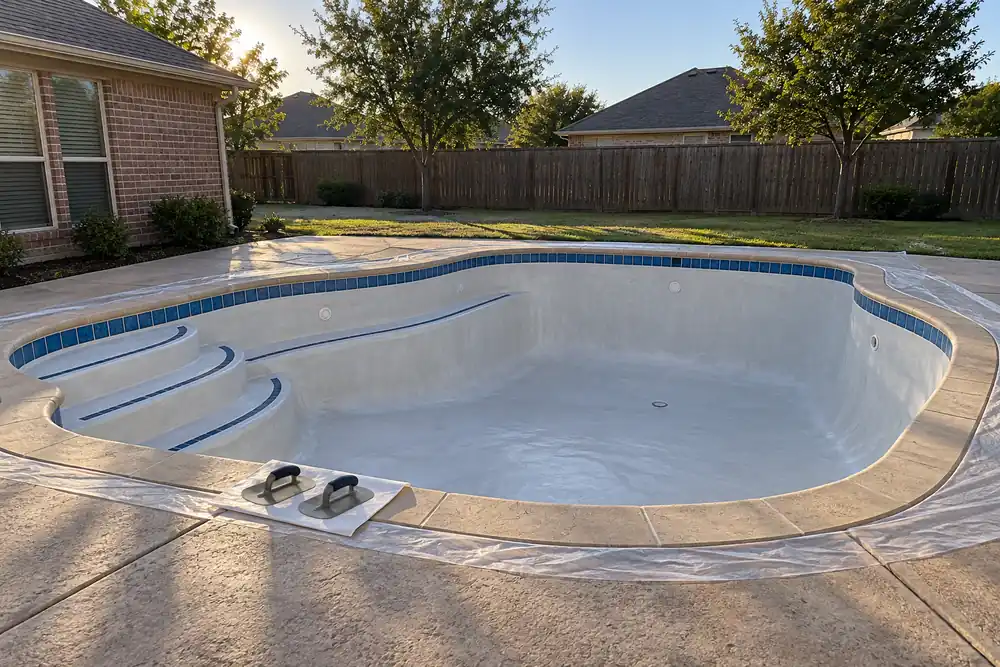
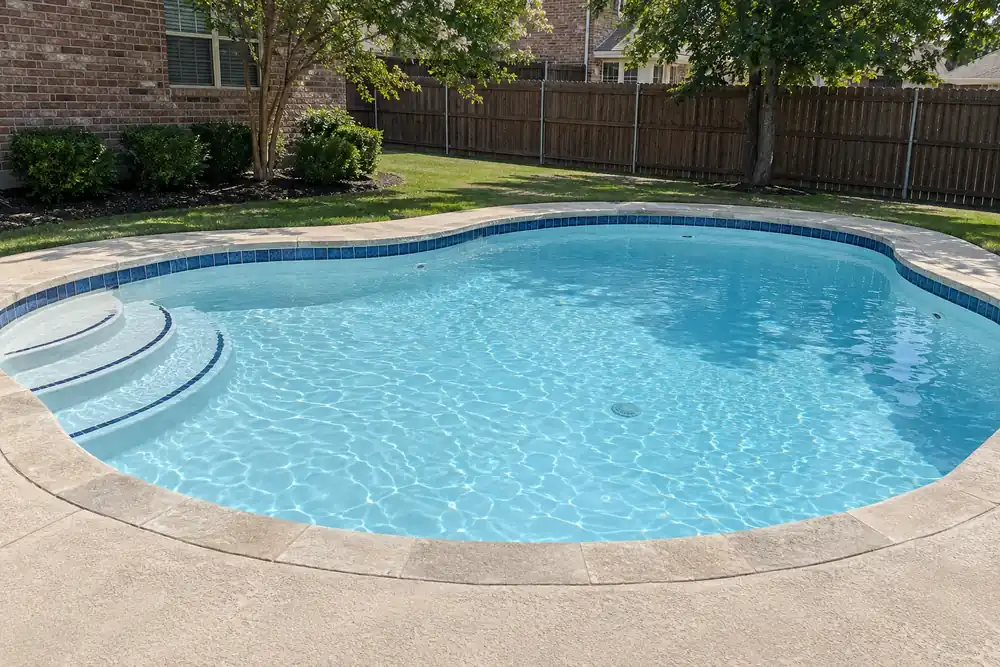
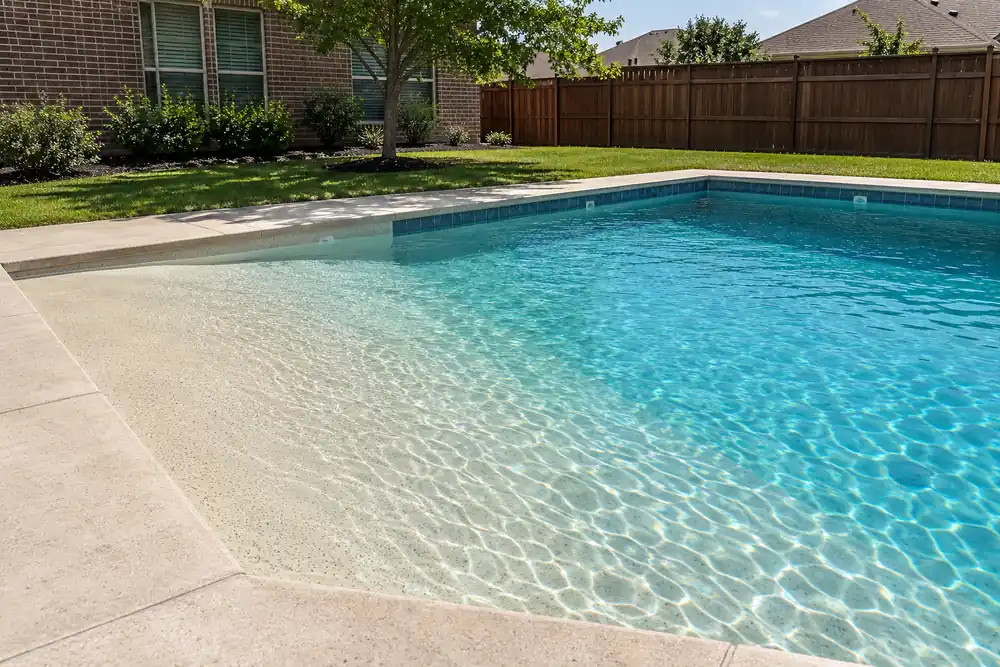
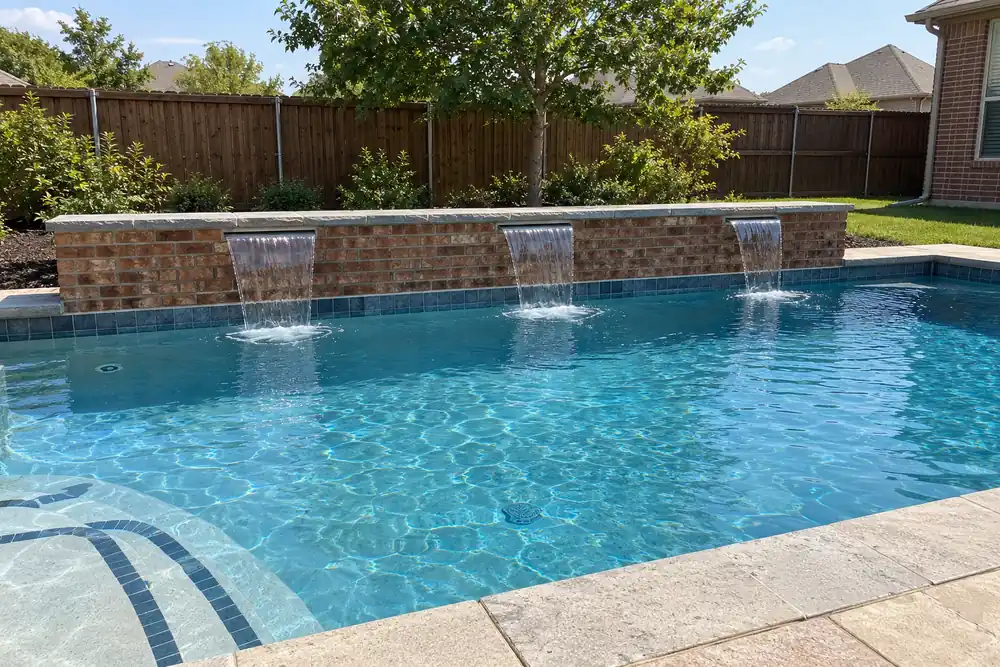
Rockwall Pool Resurfacing handles pool mastic replacement in Fate, Texas: cutting the cracked, hardened or loose sealant out of the expansion joint where a pool's coping meets its concrete deck, setting a new backer rod and filling the joint with fresh, flexible sealant. The Census Bureau counted 17,958 people in Fate in 2020 and estimates 29,007 as of July 1, 2025, a rise of 61.3% from its April 2020 base.
The city sits on State Highway 66 and the old Missouri, Kansas and Texas rail line, four miles northeast of Rockwall, and much of its newer housing lies in districts the City lists by name: Woodcreek and the Reserve at Chamberlain, Williamsburg, Edgewater and Monterra. Estimates are free, and we'll measure the joint and check how much of the old sealant still holds before anything is booked.
Call or request a free estimate any time, 24/7
Get free estimates
No charge · answered 24/7
Young pool decks in master-planned neighbourhoods
Fate's housing is young. Of the 7,109 homes in the Census Bureau's 2020–2024 survey, 66.3% were built in 2010 or later, 1,351 of them since 2020, and the median year built is 2013. Nearly all, 99.2%, are single-family detached houses, and about 91.5% of occupied homes are lived in by their owners.
The City traces that growth to Lake Ray Hubbard. After the lake was built, Centex bought 1,700 acres of raw land that became Woodcreek and the Reserve at Chamberlain, and five municipal utility districts inside the city now serve about 5,000 existing and entitled homes, by the City's count. Fate also lists public improvement districts for Williamsburg (created in 2006 and 2012), Williamsburg East–Edgewater (2020) and Monterra (2022), the kind of district it says usually pays for extras such as landscaping, open space, lakes, fountains and parks.
How long joint sealant lasts
Marmiro Stones, a coping supplier, says most elastomeric caulks last five to ten years, and it asks owners to look the coping joint over every year, resealing wherever the caulk has cracked, pulled away or broken down and keeping dirt, plants and standing water out of it. If your pool went in with a house from Fate's median year, 2013, and its joint has never been redone, it is now 13 years old (calculated), past the long end of that range.
Call or request a free estimate any time, 24/7.
(469) 653-0486Fate's rules for pool decks and concrete
The City's pool sheet keeps pools, pool decks and pool equipment out of every easement, holds a pool at least 5 feet from the rear and side property lines and from buildings with foundations, and keeps it out of the 1:1 zone from the house foundation. Before any concrete goes into a new pool deck, Fate inspects and approves the steel and the electrical bond. The deck has to be at least 3½ inches thick, with rebar of at least 3/8 inch on centres no more than 18 inches apart and a bond conductor no smaller than #8 AWG.
Joint spacing on a 3½-inch deck
The National Ready Mixed Concrete Association recommends contraction joints no farther apart than 24 to 36 times the slab's thickness, and never more than 15 feet. On a deck poured at Fate's 3½-inch minimum, that comes to about 7 to 10½ feet between joints (calculated: 24 × 3½ inches is 84 inches, 36 × 3½ inches is 126 inches). Those joints decide where shrinkage cracks form. The joint against the coping is the other kind the Association describes, an isolation joint, which lets a slab move independently of the walls and other fixed points it meets, and that is the joint the mastic seals.
Fate has adopted the 2018 International Swimming Pool and Spa Code with its own amendments, one of which makes the City's Department of Building Safety the regulator of public pools.
Call or request a free estimate any time, 24/7.
(469) 653-0486Houston Black clay under the deck
On the USDA Natural Resources Conservation Service's soil map, Houston Black clay covers 72.6% of Fate's mapped area, 68.7% of it on 1 to 3 percent slopes, with Heiden clay at 11.7% and eroded Ferris clay at 6.3% next. NRCS gives the main Houston Black soil a linear extensibility, its shrink-swell measure, of up to 12 percent and up to 55 percent clay, rates it very limited for houses on concrete slabs because it shrinks and swells, and puts 99.9% of Fate's mapped land in soils rated that way.
NRCS rates ground for slab houses, not for pools or pool decks, so the rating says nothing about any one pool. It does describe ground that moves with its moisture, and all of Fate lies in Rockwall County, where NOAA's storm records show severe to exceptional drought in August 2022.
Call or request a free estimate any time, 24/7.
(469) 653-0486From Barnes City to Fate
Fate takes its name from Lafayette Brown, one of the area's early settlers, whose wife gave him the nickname, according to the Handbook of Texas. When the railroad came through in 1886, Dr. Wylie T. Barnes platted Barnes City half a mile northeast of the old settlement, the people and businesses moved over, and in February 1887 the new town took the name Fate so it could keep its post office. The first rural mail route in Texas began from Fate in 1899, and the town incorporated in 1908.
For most of the next century it stayed small: 194 people in 1930, 127 in 1940, then 475 in 1990 and 497 in 2000, before the subdivisions arrived. Today the City points new residents to Rockwall ISD, Royse City ISD and the Pioneer Technical Arts Academy campus in Fate, and rents out the pavilion at Robert Smith Family Park.
Call or request a free estimate any time, 24/7.
(469) 653-0486Other pool work, water and drought stages
Beyond the joint, Rockwall Pool Resurfacing also handles coping repair and coping replacement, deck resurfacing and deck lifting, and the resurfacing jobs (replastering, quartz and pebble finishes) that need the pool drained. Close by, we handle adding a spa in Royse City and quartz pool finishes in Lavon.
Fate's 2025 water report says the City buys treated surface water from the North Texas Municipal Water District, treated at the district's Wylie plants from Lavon Lake. Not every address is on City water, though: on the Texas Water Development Board's map only about 55.7% of Fate's area lies in the City's own service area, with parts in Bear Creek SUD, Blackland WSC, Mount Zion WSC and Nevada SUD, so check which utility bills you before relying on any water rule.
Stage 1 of the City's 2024 water plan only encourages users to drain and refill pools less often. Stage 3 bans filling, draining or refilling an existing pool, wading pool or hot tub except to keep it structurally sound, for proper operation and maintenance, or to remove a safety risk, while still allowing top-ups for normal losses. A resurfacing means draining, so check the stage in force with the City before one is booked. When pool water does go out, Fate's pool sheet sends waste water and backwash on public sewer through a P-trap at the sanitary sewer clean-out; on a septic system, it must not harm the system or run onto a neighbour's land.
Call or request a free estimate any time, 24/7.
(469) 653-0486How a pool mastic replacement runs
Measure the joint
Length, width and depth set the sealant and the backer rod. W. R. Meadows keeps its pool-deck sealant at a 2:1 width-to-depth ratio, never shallower than 1/4 inch or deeper than 1/2 inch.
Cut out the old sealant
Sealant that is damaged but still stuck to both sides can be cut out just where it failed; where the bond has gone, W. R. Meadows takes out the whole run and cleans the joint walls.
Clean, dry and tape
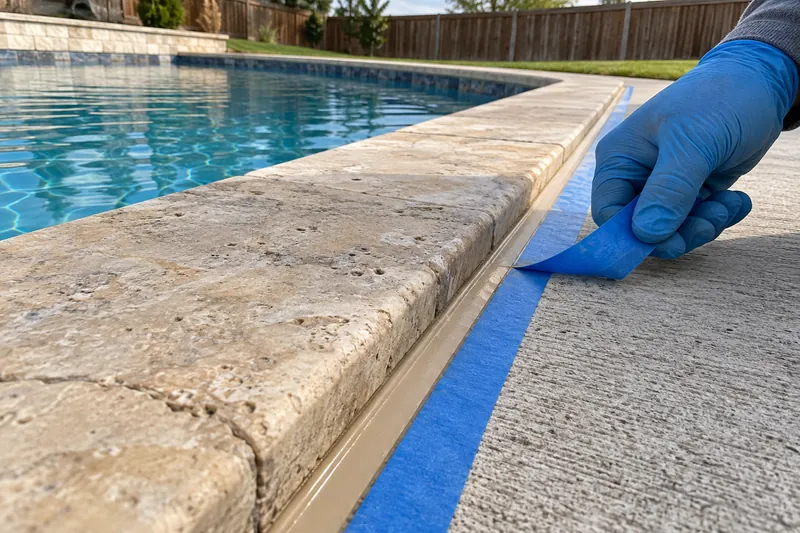
The joint has to be clean and dry, free of dust and laitance, in concrete that has fully cured, which W. R. Meadows puts at 28 days by industry standard, with masking tape along both edges.
Set the backer rod
Marmiro Stones sets closed-cell foam rod about 3/8 inch below the surface. LATICRETE explains why: sealant works best stuck to the joint's two side walls only, never to the bottom.
Pour and let it cure
Sika pours its self-leveling polyurethane between 40°F and 100°F, ideally with the joint at the middle of its expected movement; it is tack-free in 1 to 2 hours and fully cured in 3 to 5 days.
Call or request a free estimate any time, 24/7.
(469) 653-0486Pool mastic questions from Fate
How soon can the joint on a new Fate pool deck be sealed?
After the concrete has cured. Marmiro Stones waits at least 30 days after a new deck is poured before caulking, to allow for curing and shrinkage, and asks for a continuous gap around the pool, typically 1/2 to 1 inch wide and the full depth of the deck. W. R. Meadows wants fully cured concrete too, citing 28 days as the industry standard. Fate's own inspection comes earlier, on the deck steel and bond before any concrete is placed.
Does pool mastic replacement need a permit in Fate?
No Fate source we found says either way, so ask before work starts. The City requires a building permit before any pool, hot tub or spa is installed, and its pool sheet lists a $35 permit review fee and a $275 pool, hot tub or spa permit fee. Anyone paid to build, alter or repair a structure in Fate, pool contractors included, must first register with the City at $75 a year; a homeowner working on their own homestead is exempt. The Department of Building Safety can say what resealing an existing joint needs.
Get a free pool mastic replacement estimate in Fate
Rockwall Pool Resurfacing answers calls and estimate requests 24/7 for pool mastic and expansion joint work in Fate, from Woodcreek to Monterra. Tell us roughly how far the joint runs and where the sealant has split or pulled away.