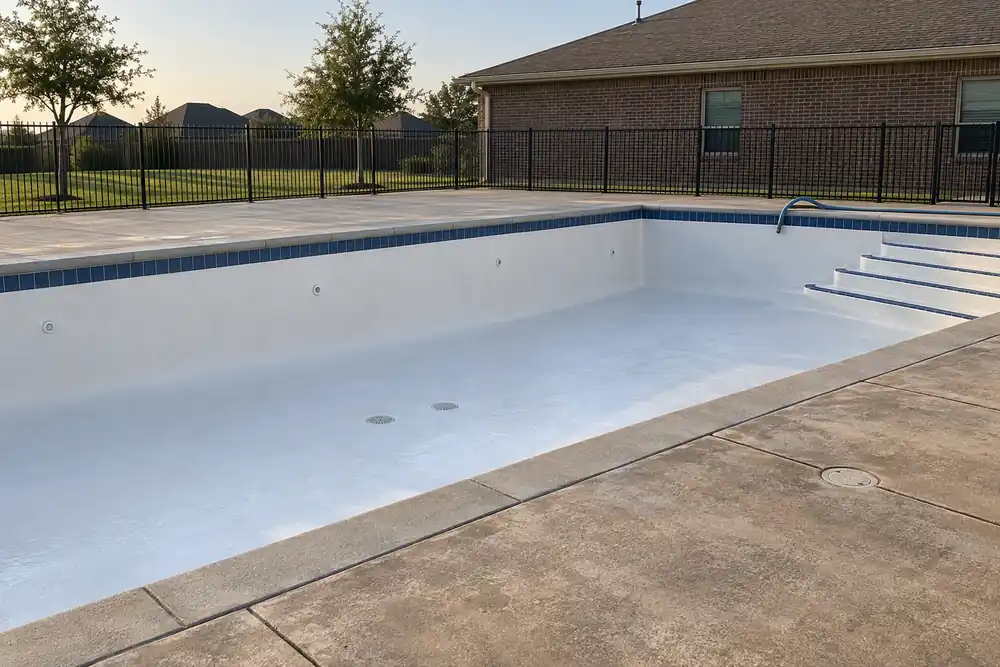
Diving Pool Conversion in Rockwall, TX
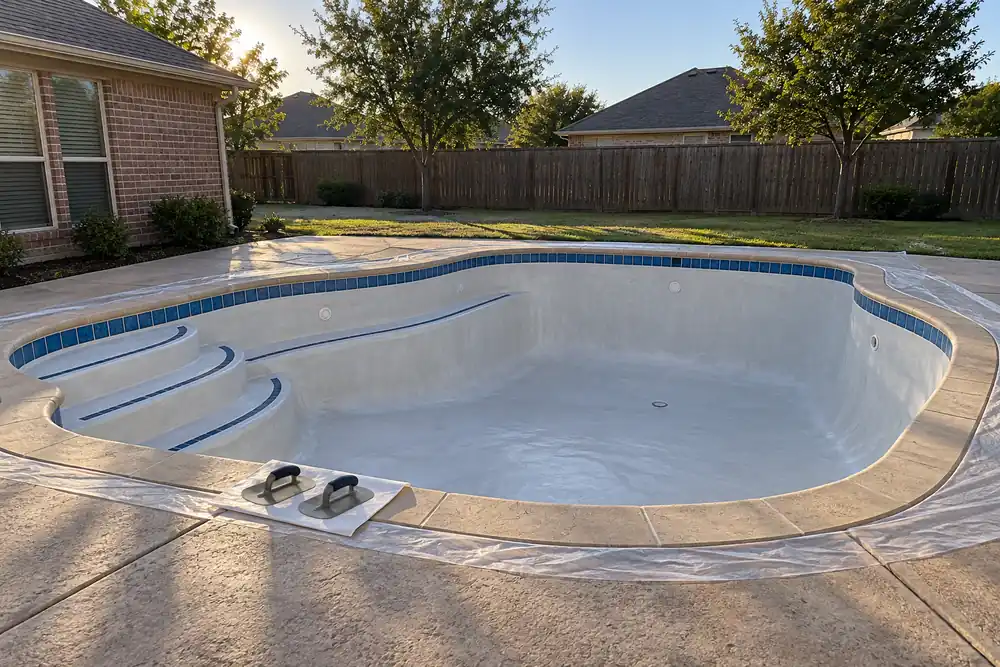
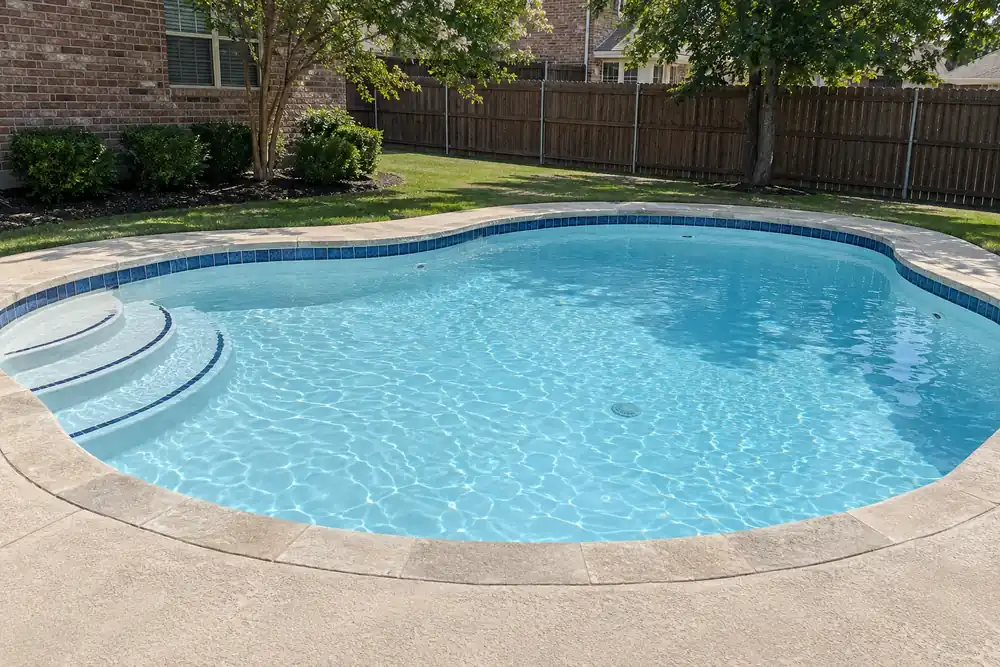
Rockwall Pool Resurfacing handles diving pool conversion in Rockwall, Texas: filling in a deep end to make the pool shallower, taking out the diving board and its stand, and finishing the new floor along with the rest of the pool. The 2021 International Swimming Pool and Spa Code, which Rockwall has adopted, sorts backyard pools into Type O, a nondiving pool, and Types I to V, which are suitable for diving equipment, so a conversion turns a diving pool into a Type O.
Typical Dallas–Fort Worth figures for 2026 put a deep-to-shallow conversion at $4,000 to $7,000, against $10,000 to $50,000 to go the other way. Estimates are free, and we'll talk through the new depth, the steps and the finish before anything is booked.
Call or request a free estimate any time, 24/7
Get free estimates
No charge · answered 24/7
What makes a pool a diving pool
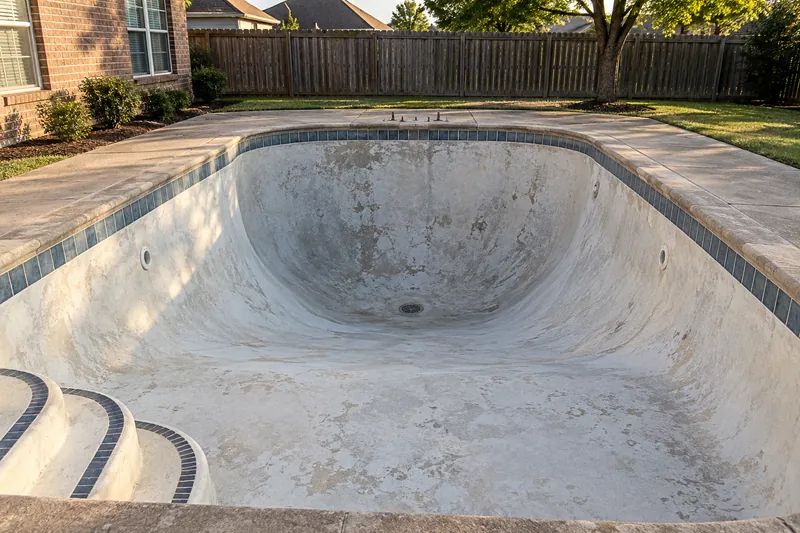
The code ties diving to the shape of the water. Its minimum diving water envelope, Table 804.1, asks the smallest diving type, Type I, for 6 feet 0 inches of depth at Point A, under the tip of the board, and 7 feet 6 inches at Point B; the deepest, Type V, needs 8 feet 6 inches and 9 feet 0 inches. No negative construction tolerance may be taken off those figures.
Where a board is installed, the code puts it in the deep area so the pool meets that envelope, and the board's maker has to state the minimum water dimensions for each board and stand combination and which pool types its boards fit. Each board carries a permanent label with the maker's name and address, its date of manufacture, its minimum diving envelope and its maximum weight.
Diving boards, stands and rocks
S.R. Smith, a diving board maker, says the pool's water envelope must meet or exceed the ANSI/APSP/ICC-5 2011 standard for its board, that an improperly sized pool, an incompatible stand or improper installation may result in death or serious injury, and that it recommends professional installation. Its residential board wants a concrete deck at least 6 inches thick around the stand and takes one person at a time, up to 250 pounds. A diving platform or diving rock has its own height cap by pool type: 42 inches above the design waterline for Types I and II, 50 for Type III, 60 for Type IV and 69 for Type V.
Call or request a free estimate any time, 24/7.
(469) 653-0486How a deep end is made shallower
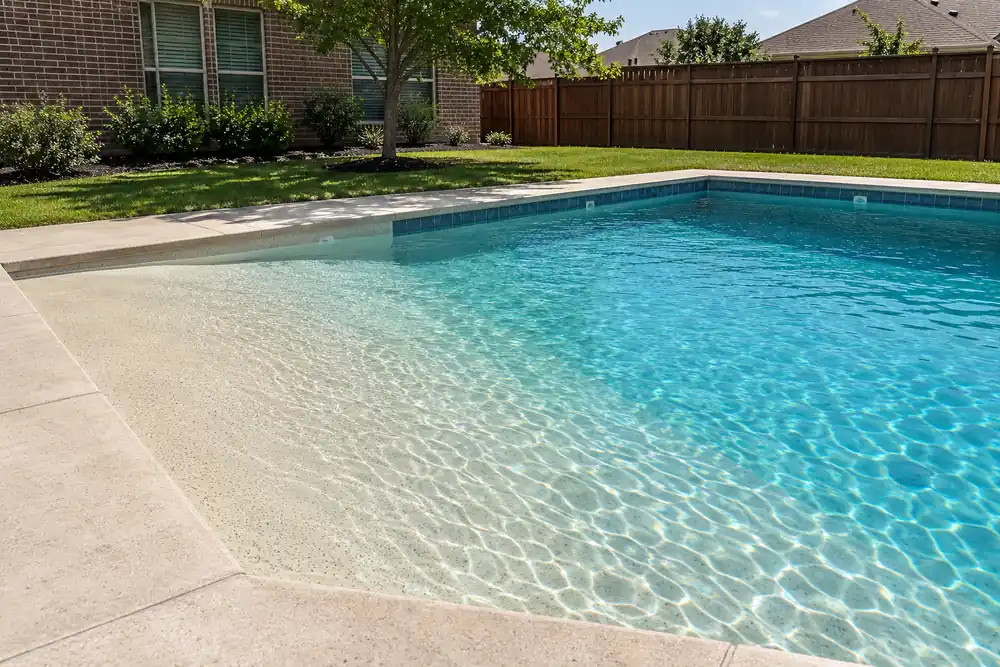
Published cost figures describe the job as draining the pool, filling in the deep area and resurfacing it, with no digging, which is why it costs less than adding depth. Whatever raises the floor, the code's rule for pool materials applies to the result: a watertight structure with a smooth, easily cleaned surface, free of cracks and joints other than structural joints, and no surface a swimmer touches that can cut, pinch, puncture or scrape in normal use.
Slopes and depths for the new floor
For backyard pools the code keeps the shallow-end floor no steeper than 1 unit down in 7 across, puts the change from shallow to deep at least 33 inches below the design waterline and at least 6 feet from where the shallow end begins, and holds the deep-end floor to no steeper than 1 in 3. Walls in both areas need their wall-to-floor transition point at least 33 inches below the waterline, with the wall above it within 11 degrees of vertical, and the overall length, width and depth are built to within plus or minus 3 inches.
Exits and handholds
Depth decides two more rules. Where the deep area is more than 5 feet deep, the code wants a way in and out there too, on both sides if the pool is wider than 30 feet at that point, with handholds allowed instead where an exit would be hazardous. Wherever the water is deeper than 42 inches, handholds have to run along the perimeter at the top of the deck or coping, unless an underwater bench, seat or swimout is installed. A shallower pool can also take a tanning ledge or new steps in the same project.
Once the floor is reshaped, the pool needs its new finish, and a full pool replastering at the same time puts the old walls and the new floor under one surface. Rockwall Pool Resurfacing will talk through both at the estimate.
Call or request a free estimate any time, 24/7.
(469) 653-0486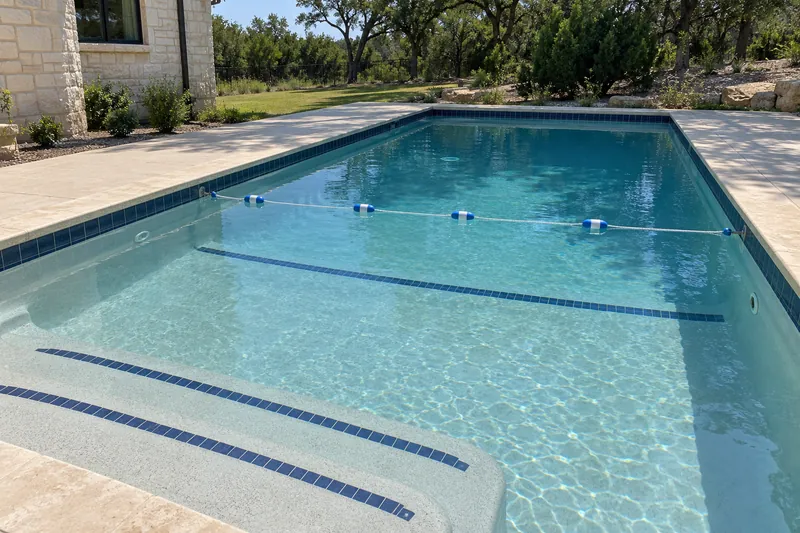
Permits for a conversion, at home and at HOA pools
The 2021 code calls any construction or renovation of an existing pool, other than a repair, an alteration, and an alteration has to meet the rules for new work. The City of Rockwall's Building Inspections page says swimming pools need building permits, so ask the Building Inspections Department what a conversion needs before the pool is drained. A conversion can also be one part of a larger pool remodeling job with new tile, coping and steps.
At a public pool, which in Texas takes in HOA and apartment pools, the City's public pool ordinance requires a building permit and City plan review before the pool's structure is changed, and a pre-opening inspection before the remodeled pool is used. Texas also requires any public pool with diving or jumping rocks or ledges to be designed by a licensed engineer or licensed architect.
Northwest of Rockwall, in Parker, where the City measures pool setbacks to the edge of the water, Rockwall Pool Resurfacing also handles diving pool conversion in Parker.
Call or request a free estimate any time, 24/7.
(469) 653-0486Diving pool conversion questions and answers
How much does it cost to make a pool more shallow?
National figures for 2026 put it at about $4,000 to $7,000 to drain the pool, fill in the deep area and resurface it, and national figures from 2025 give $3,500 to $7,000. Rockwall Pool Resurfacing measures the pool and prices the conversion free.
Can the diving board stay after a conversion?
No. The code allows no manufactured or fabricated diving equipment on a Type O pool, and the ANSI/APSP/ICC-5 2011 standard, in the excerpt S.R. Smith publishes, says diving equipment shall not be installed on Type O pools.
Is it safe to dive into a pool after it is made shallower?
Not head first. The safety appendix of the ANSI/APSP/ICC-5 2011 standard, included for information and not part of the standard itself, lists "Don’t ever dive head first into shallow water (5 feet or less)" among its diving do's and don'ts.
Does a pool still need a rope and float line after a conversion?
If the new floor still has a first slope break, yes. Wherever a backyard pool has one, the code calls for a rope and float assembly across the width of the pool, 1 to 2 feet toward the shallow side of the break, with its anchors permanently attached to the pool wall, coping or deck.
Do the depth markers change when an HOA pool is made shallower?
Yes, at a public pool. The code puts depth markers at the maximum and minimum depths and at every point of slope change, in steps of no more than 2 feet and no more than 25 feet apart, so new depths mean new markers. Where a public pool is 5 feet deep or less, it also wants the "No Diving" symbol on the deck at intervals of no more than 25 feet, directly next to a depth marker.
Get a free diving pool conversion estimate
Rockwall Pool Resurfacing answers calls and estimate requests 24/7 for diving pool conversions in Rockwall and nearby towns. Tell us how deep the deep end is now and whether there is a board or rock.