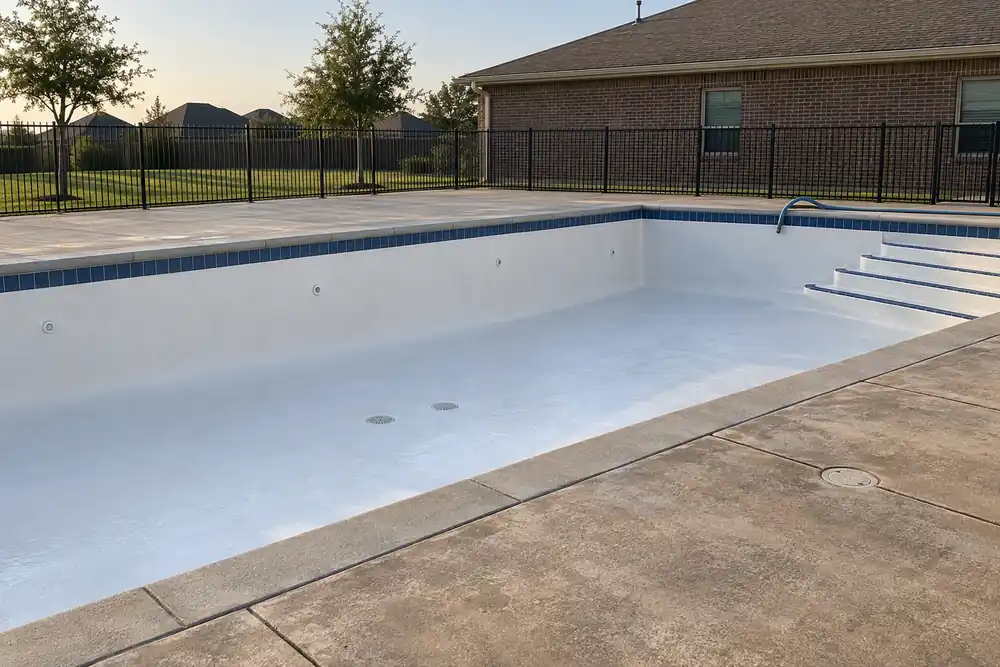
Pool Tile Cleaning and Calcium Removal in Rockwall, TX
Rockwall Pool Resurfacing handles pool tile cleaning and calcium removal in Rockwall, Texas: taking the white scale line off waterline tile by hand with calcium removers, or by media blasting with glass bead or softer media, with the water lowered below the tile instead of the pool being drained. The National Plasterers Council defines scale as minerals or metals that come out of solution and stick to tile and other surfaces, leaving unsightly stains and roughness, and names calcium carbonate as a major part of it.
Published Dallas–Fort Worth figures put professional bead-blast tile cleaning at $500 to $750 on average, or $5.25 to $6 per linear foot of tile. Estimates are free, and we'll look at the tile, the grout and how heavy the scale is before anything is booked.
Call or request a free estimate any time, 24/7
Get free estimates
No charge · answered 24/7
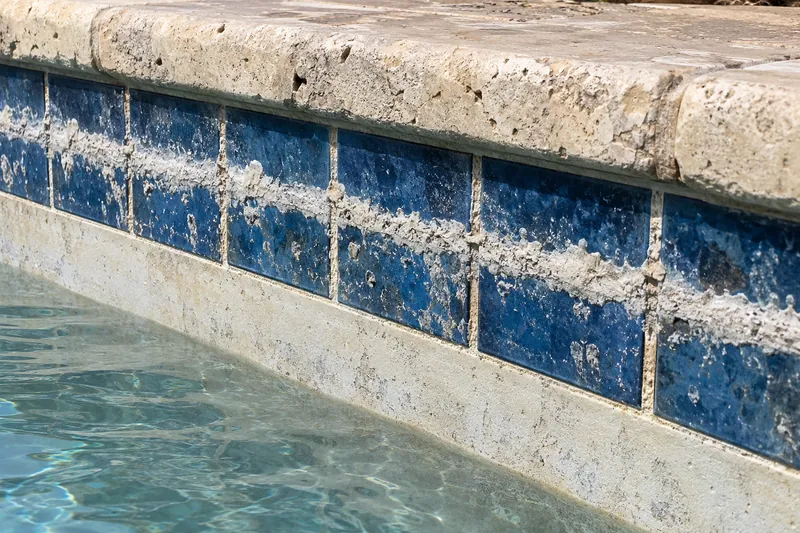
What the white line on pool tile is
Almost all of it is calcium. Orenda, a pool-chemical maker, says 99% of the scale found in water is calcium-based and that scale always comes from oversaturated water; the line along the tile is left as water evaporates off the tile face and its calcium stays behind.
Carbonate, silicate and sulfate scale
Calcium carbonate is the common kind. Orenda describes two harder ones: calcium silicate scale, which forms on cement surfaces, often looks rounded like grains of rice, seems immune to muriatic acid and has no known chemical remover; and calcium sulfate scale, sharp, nearly transparent crystals that can cut skin and swimsuits, unaffected by muriatic acid unless the acid is boiling, and most practically sanded or ground off.
Orenda adds a quick check: if white calcium shows only on cement and on nothing around it, it isn't scale of any type, because scale lands on every surface it touches. The National Plasterers Council has a name for a white deposit that comes from inside the cement rather than from the water: efflorescence, soluble compounds, mostly calcium hydroxide, that moisture carries from within a cement-based material to its surface.
Call or request a free estimate any time, 24/7.
(469) 653-0486How pool tile is cleaned
Weekly brushing comes first. Oceanside Glass & Tile and NPT, two pool tile makers, both put brushing or scrubbing tile on a weekly schedule and both warn against pumice stones; Oceanside adds wire brushes and NPT adds 50/50 brushes to the tools that can damage tile. For mineral scale NPT uses a non-acidic calcium cleaner, which it says won't affect the pool's pH, and neither maker allows abrasive or acidic cleaners. The maker of the Pumie scouring stick lists pools among its uses but rules out glass, fiberglass and plastics, warns that some decorative tile and colored porcelain is fragile, and asks for a test on a small area first.
Bead blasting and softer media
For heavy deposits, NPT and Oceanside point to media blasting, an abrasive shot under pressure at the surface, usually by pool tile cleaning specialists. They describe media ranging from glass bead at the aggressive end to baking soda at the mild end, and say baking soda or a medium of similar hardness, such as kieserite, is generally aggressive enough to remove scale while staying safe for tile, after a test in an inconspicuous spot.
Kramer Industries, which makes blasting media and equipment, recommends glass beads for pool tile and walnut shell grit for the deck, and says glass beads won't harm the tile or its glaze. It also asks that everyone, pets included, be out of the pool and off the deck before blasting starts, with the operator in gloves, goggles and protective clothing.
Call or request a free estimate any time, 24/7.
(469) 653-0486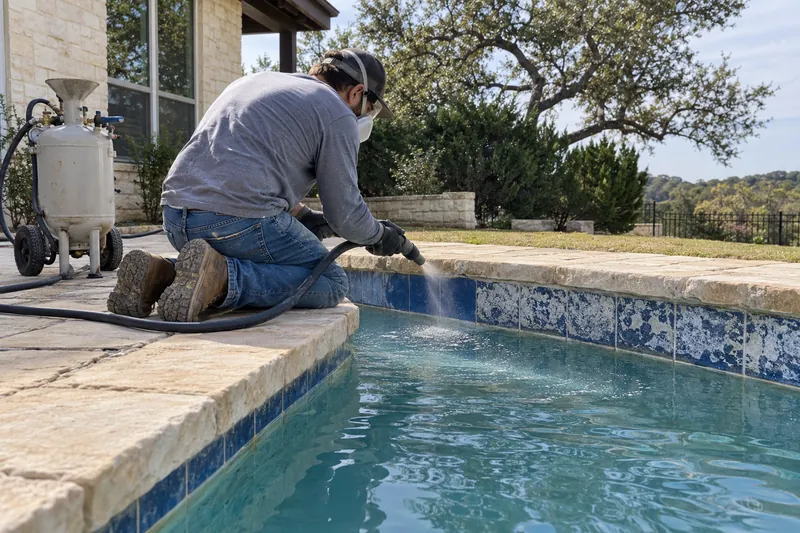
Rockwall's water and why scale comes back
Cleaning removes the scale, not its cause. Orenda says grinding or bead blasting leaves the water's imbalance in place, so scale usually returns, and traces any calcium carbonate scale to a Langelier Saturation Index above +0.30. The Pool & Hot Tub Alliance cites -0.3 to +0.5 as the APSP range for balanced pool water, and notes that sequestering agents can hold back scaling even when the index runs high.
The City of Rockwall's 2024 water report listed total hardness up to 202 ppm (105 to 202) and pH up to 8.9. Orenda points out that hardness alone is rarely what drives scale unless it is extremely high; it usually takes other factors, such as high pH, water temperature or carbonate alkalinity, to push calcium carbonate out of the water.
Keeping tile cleaner between cleanings
NPT says a surface protectant on the tile can keep mineral deposits from bonding and, with regular brushing, can greatly reduce or even end the need for chemical calcium cleaners and aggressive cleaning. Lunada Bay Tile recommends sealing new tile before the pool is filled, with a sacrificial sealer that needs reapplying now and then, and running overflow features from sunrise to sunset, since every time water dries on tile it leaves minerals behind.
In a spa, heat pushes the water's saturation index up, toward scale; refinishing the spa itself is spa resurfacing. Where the tile under the scale is loose, cracked or missing grout, the fix is pool tile repair.
Call or request a free estimate any time, 24/7.
(469) 653-0486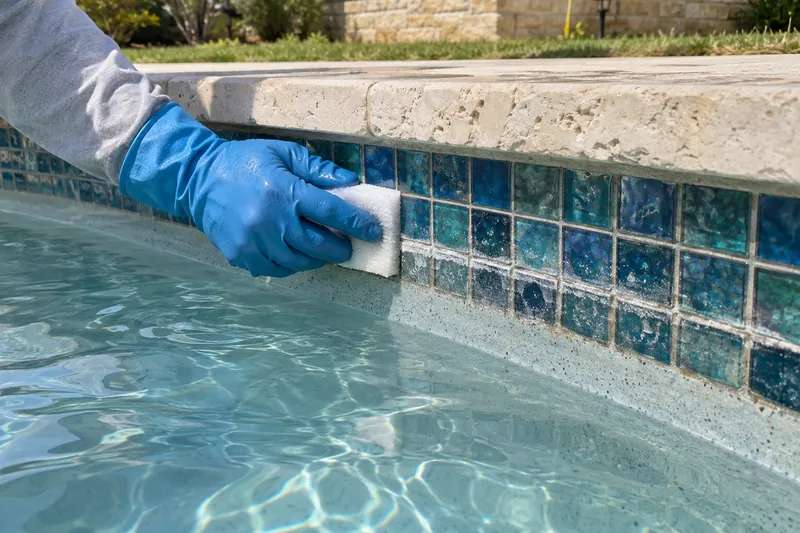
Pool tile cleaning cost
National figures from 2025 price tile cleaning by the linear foot of tile, with a minimum charge per job:
- Typical rate
- $6–$10 per linear ft
- Typical job minimum
- $400–$1,000
- Light scale, chemical or pumice
- $3–$6 per linear ft (minimum $250–$500)
- Moderate scale, glass bead or soda
- $6–$8 per linear ft (minimum $400–$850)
- Heavy scale, salt or multi-pass media
- $8–$12 per linear ft (minimum $750–$1,000+)
- Optional grout sealing
- $2–$3 per ft
Published national figures, 2025. Ranges, not quotes from Rockwall Pool Resurfacing.
For tile that is dirty but otherwise sound, national 2025 figures put a professional acid wash of the tile at $150 to $300, though several tile makers warn against acid on tile. Draining the pool and acid washing the whole surface is a different job, a pool drain and acid wash. Rockwall Pool Resurfacing prices tile cleaning free after a look at the scale.
Call or request a free estimate any time, 24/7.
(469) 653-0486Pool tile cleaning questions and answers
What is the best way to clean pool tile?
It depends on how heavy the scale is. For routine buildup, Oceanside Glass & Tile scrubs on its calcium remover with a nylon bristle brush or a nylon scrub pad; heavy scale may need the media blasting described above. NPT and Oceanside both test any blasting in an inconspicuous area first, and Rockwall Pool Resurfacing will look at the tile and say which it needs.
How often should pool tiles be cleaned?
Brush them weekly. Oceanside, NPT and Lunada Bay Tile all put tile brushing on a weekly schedule, and Lunada Bay calls it essential along the waterline, where evaporation is highest, using a soft brush or a non-abrasive scrub pad. Blasting is for scale that brushing and calcium cleaners no longer move.
Does the pool have to be drained to clean the tile?
No. For blasting, Kramer Industries lowers the water about 6 inches below the tiles, shoots the glass beads at low pressure and expects around two hours for a regular-size pool; the spent beads sink to the bottom, where the pool cleaner picks them up on its next cycle.
Will bead blasting damage pool tile?
The makers disagree. Kramer says glass beads won't harm tile or glaze, NPT and Oceanside call glass bead the aggressive end of the range, and Lunada Bay Tile, a glass and ceramic tile maker, advises against any mechanical abrading or blasting of glass or ceramic tile. Where tile has been dulled or etched, Oceanside sells a restorer that it says can be applied after acid washing or media blasting to bring back color and luster.
Can vinegar or muriatic acid remove calcium from pool tile?
Tile and chemical makers mostly warn against it. Lunada Bay Tile says never to put muriatic acid directly on glass or ceramic tile, and Orenda doesn't recommend putting acid directly on scale. Lunada Bay does suggest equal parts vinegar and water with a few drops of a non-detergent cleaner, left about 10 minutes and scrubbed gently, for routine cleaning of its own tile; the Natural Stone Institute warns that vinegar and other acids can etch travertine and limestone, which matters where the coping above the tile is stone.
Get a free pool tile cleaning estimate
Rockwall Pool Resurfacing answers calls and estimate requests 24/7 for tile cleaning and calcium removal in Rockwall and nearby towns. Tell us roughly how long the tile line is and how heavy the scale looks.